

Understanding Colonial Medicine in Jasper Gunn’s World
How a Seventeenth-Century Physician Practiced in Early New England
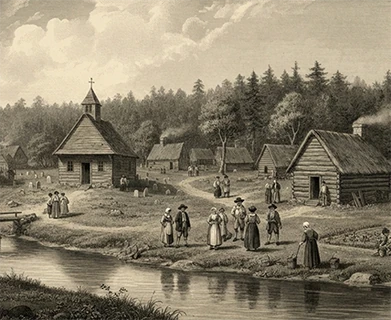
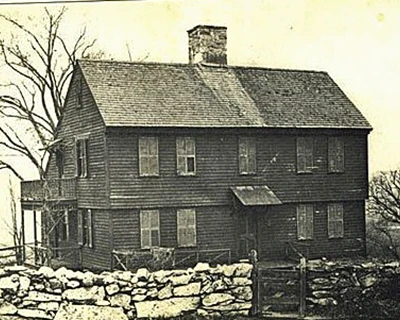
When Dr. Jasper Gunn arrived in New England aboard the Defence in 1635, he brought with him a skill possessed by relatively few colonists: formal medical training. In an era when many settlements depended upon folk remedies, midwives, or self-care, a trained physician represented both practical knowledge and social standing. Yet to understand Jasper’s role in Milford, it is important to understand what medicine actually meant in the seventeenth century.
Medicine in colonial New England was neither modern science nor mere superstition. Rather, it was a learned European tradition grounded in centuries of scholarship and adapted to the realities of frontier life. Physicians possessed no knowledge of bacteria, viruses, immunity, or infection. They worked without microscopes, antibiotics, anesthesia, or modern surgical techniques. Nevertheless, they practiced within a coherent medical framework that was widely accepted throughout England and Europe.1
The Theory of the Four Humors
Like most educated physicians of his generation, Jasper Gunn would have been trained within the Galenic tradition, named for the second-century physician Galen. According to this system, the human body contained four humors: blood, phlegm, yellow bile, and black bile. Health resulted from balance among these humors, while illness arose when one became excessive, deficient, or corrupted.2
Symptoms were interpreted accordingly. Fever might indicate excess heat and blood. Lethargy could suggest an overabundance of phlegm. Digestive disorders might be attributed to disturbances of bile. The physician’s task was not to attack a specific disease but to restore equilibrium within the body.
While modern readers may find this framework unfamiliar, it remained the dominant medical theory of the Western world for centuries and shaped medical education well into the eighteenth century.3
Common Treatments
The treatments employed by colonial physicians reflected these underlying beliefs. Bloodletting remains the most familiar example, but it was only one among many therapeutic tools. Physicians also prescribed purgatives, emetics, sweating therapies, herbal preparations, and carefully regulated diets.4
Bloodletting was intended to reduce excess blood or heat. Purging and vomiting were used to expel what physicians considered corrupted humors. Herbal remedies were administered to cool, warm, dry, or moisten the body according to the patient’s condition.
Many treatments drew upon English medical texts, but colonial practitioners also adapted local plants and remedies to New England conditions. Practical experience often supplemented formal learning, especially in settlements far removed from European centers of medicine.5
Physician, Surgeon, and Healer
Although England recognized distinctions among physicians, surgeons, and apothecaries, those boundaries often blurred in colonial communities.
A physician such as Jasper Gunn would have diagnosed illness, prescribed treatments, and advised families. Yet in a settlement such as Milford, he would likely also have treated wounds, stabilized fractures, managed head injuries, and supervised recovery from accidents. Practical necessity frequently outweighed professional specialization.6
Jasper’s known work with brass and copper suggests a man accustomed to precision, measurement, and craftsmanship. Those same qualities would have served him well in setting bones, dressing wounds, and caring for injured neighbors.
Medicine During Epidemics
Disease posed one of the greatest threats to early New England communities. Outbreaks of influenza-like illnesses, dysentery, fevers, and smallpox appeared with unsettling regularity. Mortality rates could be high, particularly among children and newly arrived colonists.7
Physicians could not identify the causes of these diseases, nor could they prevent their spread. Yet they provided something equally valuable: observation, experience, and judgment.
A skilled physician learned when intervention might help and when it might do harm. In many cases, careful nursing, dietary management, and supportive care offered better prospects than aggressive treatment. The ability to recognize those limits became one of the most important marks of medical competence.8
Faith and Healing
Medicine in Puritan New England existed within a broader religious worldview. Illness was understood not merely as a physical event but as part of God’s providence. Prayer, fasting, and self-examination frequently accompanied medical treatment.
For a man such as Jasper Gunn—who served as physician, teacher, civic officer, and deacon—the care of the body could not be entirely separated from the care of the soul. Physical healing, moral reflection, and communal responsibility were deeply intertwined in the daily life of the colony.9
Jasper Gunn’s Place in the Community
Measured against modern standards, seventeenth-century medicine was limited and often ineffective. Yet such comparisons risk overlooking the importance of physicians within their own time.
Jasper Gunn’s value to Milford did not rest solely upon his ability to treat illness. He brought learning to a frontier settlement. He provided guidance during epidemics and emergencies. He offered practical assistance when accidents occurred and reassurance when disease struck. Most importantly, he represented a source of stability in a world where uncertainty was a constant companion.
The confidence placed in Jasper by Milford’s founders is reflected not only in his medical work but also in the civic and religious responsibilities entrusted to him throughout his life. In a community struggling to establish itself in a new land, a physician was far more than a healer. He was a trusted steward of knowledge, judgment, and care.
Further Reading
- National Park Service, “Medicine and Health in the Seventeenth Century” — https://www.nps.gov
- Colonial Society of Massachusetts — https://www.colonialsociety.org
- Yale Medical Historical Library — https://medicine.yale.edu/library
Footnotes
-
Harold J. Cook, The Decline of the Old Medical Regime in Stuart London (Ithaca, NY: Cornell University Press, 1986), 1–25. ↩
-
Lester S. King, The Medical World of the Eighteenth Century (Chicago: University of Chicago Press, 1958), 1–20. ↩
-
Roy Porter, The Greatest Benefit to Mankind: A Medical History of Humanity (New York: W. W. Norton, 1997), 153–189. ↩
-
National Park Service, “Medicine and Health in the Seventeenth Century,” Jamestown Historic Site, accessed June 21, 2026. ↩
-
Harold J. Cook, Matters of Exchange: Commerce, Medicine, and Science in the Dutch Golden Age (New Haven: Yale University Press, 2007), 321–347. ↩
-
Colonial Society of Massachusetts, studies and proceedings relating to physicians and medical practice in early New England. ↩
-
David D. Hall, Worlds of Wonder, Days of Judgment: Popular Religious Belief in Early New England (Cambridge, MA: Harvard University Press, 1990), 115–142. ↩
-
Lester S. King, The Medical World of the Eighteenth Century, 34–52. ↩
-
David D. Hall, Worlds of Wonder, Days of Judgment, 143–169. ↩