

Captain Asahel Gunn (1730–1796)
Militia Captain, Town Selectman, and Revolutionary War Veteran
- Born: 16 November 1730, Sunderland, Hampshire County, Province of Massachusetts Bay
- Died: July 1796, Montague, Hampshire County, Massachusetts
- Parents: Deacon Nathaniel Gunn (1693–1779) and Esther Belden
- Spouse: Thankful Marsh (1728–1817)
- Occupation: Militia captain, town selectman, meetinghouse keeper
- Military service: Massachusetts Militia, Sixth Hampshire County Regiment; Colonel David Wells’s Regiment, Saratoga Campaign, 1777
- Burial: Old South Cemetery, Montague, Massachusetts
A Family Rooted in New England
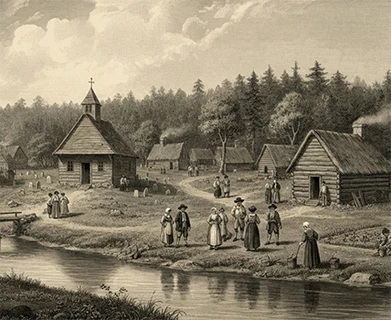
Asahel Gunn was born in Sunderland on 16 November 1730.12 His family had then been in New England for nearly a century. Dr. Jasper Gunn crossed the Atlantic aboard the Defence in 1635 and became one of the early settlers of Milford, Connecticut. Asahel was the fifth in the line descended from him:
- Dr. Jasper Gunn (1607–1671)
- Nathaniel Gunn (born between 1637 and 1640, exact date unknown; died 1663)
- Deacon Samuel Gunn (1662–1755)
- Deacon Nathaniel Gunn (1693–1779)
- Captain Asahel Gunn (1730–1796)
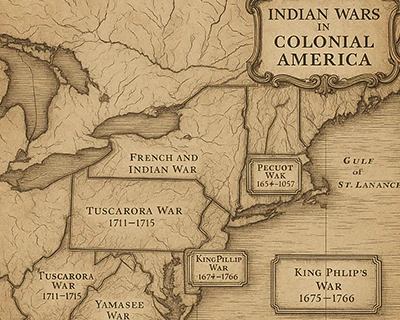
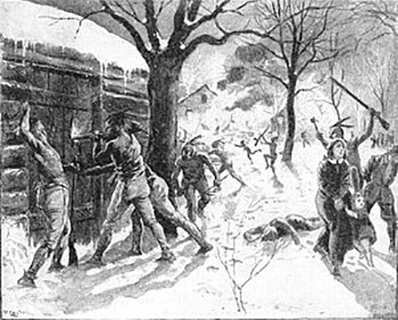
His parents, Deacon Nathaniel Gunn and Esther Belden, came from families established in the religious and civic life of western Massachusetts. His grandfather, Deacon Samuel Gunn, had survived King Philip’s War, when attacks threatened the English settlements along the Connecticut River. By Asahel’s time the frontier had moved north and west, and the river towns had become settled farming communities. Family, church, and town still made the same demands on a man, and those demands shaped his career.
The Gunn Brothers
Asahel’s family produced several men who were prominent in Montague’s civic, religious, and political life.
His older brother, Lieutenant Nathaniel Gunn Jr. (1726–1807), married Dorothy Marsh and became a deacon. Family histories associate him with a Montague tavern that welcomed traveling Baptist ministers and came to be known as the Baptist Tavern.
Another brother, Dr. Moses Gunn (1728–1802, reported), was educated at Yale and took part in the political discussions that preceded independence. A reply to the Boston Committee of Correspondence, preserved in the historical literature of Montague, has been attributed to him.3
Nathaniel’s part was in the church, Moses’s in political argument, and Asahel’s in town government and military command. Together the brothers show how one New England family took on public responsibility between colony and republic.
Marriage to Thankful Marsh
On 28 November 1751, Asahel married Thankful Marsh, daughter of Ebenezer Marsh and Elizabeth Gillett.45 Ebenezer Marsh was among the first settlers of the district that became Montague, building near the area known as Hunting Hills. Thankful’s sister Dorothy had married Asahel’s brother Nathaniel six years earlier, so two Marsh sisters married two Gunn brothers.
Asahel and Thankful made their home in Montague and raised eight children. Their lives spanned the last decades of British colonial government, the Revolution, and the founding of the United States.
Public Service in Montague
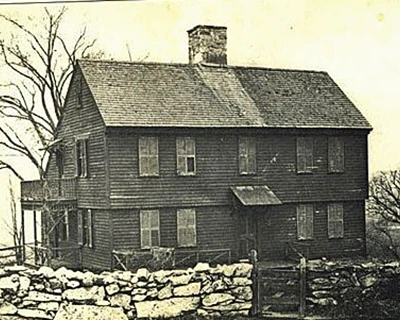
Asahel’s public service began with ordinary duties. According to the family history The Gunns, he kept the town meetinghouse and was paid two shillings a year for it.4 The meetinghouse was both the place of worship and the center of town business, where inhabitants met to decide questions of government, taxes, and roads. The surviving account does not describe his duties, but the post put him in the practical business of running the town.
Montague’s roster of selectmen lists Captain Asahel Gunn for 1776 and 1777, the opening years of the Revolution, and again for 1791 and 1792, after the adoption of the Constitution.6 He helped administer local affairs under two very different governments. In eighteenth-century New England, local office and military duty were closely tied, and his career shows it.
Thankful Marsh Gunn and the First School
While Asahel served the town and its militia, Thankful is credited with a contribution of her own. The Gunns states that she taught the first school in Montague, offering reading, writing, and arithmetic.4 The date and place of her school have not been established from town education records, so for now this remains a family tradition.
In colonial towns the ability to read Scripture, keep accounts, and understand a written agreement had practical value, and her teaching belongs beside her husband’s civic and military service. The family’s interest in education reappears in later generations, most notably in Frederick William Gunn, the nineteenth-century educator who founded the school that bears his name.
Captain of the Montague Militia
By the spring of 1776, Asahel was captain of the Ninth Company, also called the Second Montague Company, of the Sixth Hampshire County Regiment of Massachusetts militia. An officer return dated 23 April 1776 names the company and its officers, and the Massachusetts Council ordered commissions issued on 7 May. Asahel Keet was appointed second lieutenant in Captain Gunn’s company.7 These records establish that Asahel held a recognized command.
The militia was a citizens’ force. Its men came from the towns where they lived, and farmers and tradesmen could be called out while still keeping up their own work. Company officers organized and led them when service was required. For Asahel, command of the company added military duty to a life already given to local affairs.
The Saratoga Campaign of 1777
In September 1777, Captain Gunn’s company served under Colonel David Wells in the campaign against British General John Burgoyne in northern New York. Massachusetts records show the company in service from 23 September through 18 October 1777.8 That covers the closing weeks of the Saratoga campaign, which ended with Burgoyne’s surrender on 17 October. The defeat of Burgoyne was one of the decisive events of the Revolution. It showed that American forces could beat a large British army, and it helped bring France into the war as an ally.
The surviving records do not show whether the company was engaged in a battle, or what it was ordered to do.2 The first of the two main battles at Saratoga was fought on 19 September, before the company’s recorded service began, so the question is whether it was present for the second, on 7 October. The records do place Asahel’s command within the Massachusetts militia that served in the campaign.
The Men of Captain Gunn’s Company
Records name several men in the company during the Saratoga mobilization:
- Israel Gunn, sergeant
- Nathaniel Gunn, private
- Samuel Gunn, private
- Stephen Gunn, private
- Asa Fuller, sergeant
- Zebediah Allis, soldier
Four Gunns in one company suggests that it included members of the extended family. Their relationships to Asahel have not been established.8
Some of the other men had served before. Asa Fuller took part in the mobilization after the fighting at Lexington and Concord in April 1775,9 and Zebediah Allis also had earlier military experience. Samuel Gunn appears in records of Captain Robert Oliver’s company of minutemen during the Lexington alarm.10 The militia drew on men who had already answered earlier calls. For Asahel, command meant leading neighbors and acquaintances, and possibly relatives.
A Father and Two Sons in the Revolution
Two of Asahel’s sons also served. Asahel Gunn Jr., born 5 February 1757, was eighteen when the war began. A military listing records him as a private from 16 December 1776 to 19 March 1777. The Gunns further calls him a lieutenant and says he was discharged as a captain on 3 October 1778. Those ranks need confirmation in other military records.4
His younger brother, Eli Gunn, born 1 November 1759, is also identified in the family history as a Revolutionary soldier. His regiment, rank, and dates of service have not been established.
The household of Asahel and Thankful Marsh Gunn thus sent a father who commanded a militia company and two sons into the war.
The Children of Asahel and Thankful Gunn
Genealogical compilations list eight children:
- Mary Gunn (1752–1783), born 25 November 1752.
- Thankful Gunn (1754–1808), born 17 August 1754.
- Asahel Gunn Jr. (1757–1834), born 5 February 1757; Revolutionary War soldier.
- Eli Gunn (1759–1837), born 1 November 1759; Revolutionary War soldier.
- Eunice Gunn (1762–1838), born 11 April 1762.
- William Gunn (1764–1827), born 28 November 1764.
- Abel Gunn (1766–1832), born 8 November 1766.
- Martin Gunn (1769–1819), born 30 August 1769.
The dates and later histories of the children should be checked against original town and probate records before they are treated as established.
Later Years
Asahel survived the war and served again as selectman in 1791 and 1792. The man who had commanded a militia company in the Revolution was now helping run a town in the new republic.
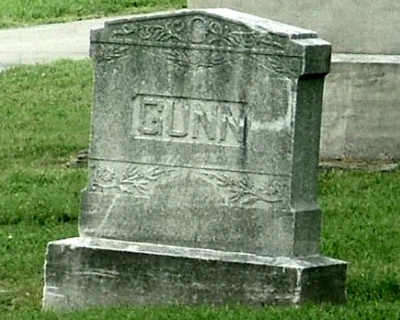
He died in Montague in July 1796. Published records generally give 11 July, but the surviving gravestone has been read as 12 July. The discrepancy remains to be resolved against the original town death register.11 He was buried in Old South Cemetery, and his gravestone carries the title Captain Asahel Gunn.
Thankful outlived him by more than twenty years and died on 19 February 1817.
Legacy
Asahel Gunn’s life was bound up with the work of his town. He kept the meetinghouse, served as selectman, commanded a militia company in the Revolution, and returned to town office after independence. His wife taught children in Montague, and two of their sons served in the war.
Families like his supplied the officers, the soldiers, and the town government on which the Revolution depended. For more than a century and a half, the descendants of Jasper Gunn had helped settle and build New England. By Asahel’s death in 1796, they were citizens of a new nation.
Endnotes
Footnotes
-
John Montague Smith et al., History of the Town of Sunderland, Massachusetts (1899), 385. Gunn family vital and genealogical information. ↩
-
The family history gives Asahel’s birth year as 1736, whereas other genealogical accounts identify 1730. The latter is adopted provisionally here. Several of the published Revolutionary War entries cited in this biography were identified through indexes and transcriptions; the original archival manuscripts have not yet been examined. ↩ ↩2
-
Franklin Bowditch Dexter, Biographical Sketches of the Graduates of Yale College, biographical entry for Moses Gunn, identifying his parents as Nathaniel and Esther Gunn and his grandfather as Deacon Samuel Gunn. The death date of Moses Gunn remains subject to reconciliation. ↩
-
The Gunns, 69. Family history account of Asahel Gunn, his marriage to Thankful Marsh, his meetinghouse responsibilities, Thankful’s teaching, and the Revolutionary service of their sons. ↩ ↩2 ↩3 ↩4
-
Dwight Whitney Marsh, Marsh Genealogy (1895), 232. Genealogical information concerning the Marsh and Gunn families. ↩
-
Selectmen of Montague, 1756–1910, historical roster identifying Captain Asahel Gunn’s service in 1776–1777 and 1791–1792. ↩
-
Massachusetts Secretary of the Commonwealth, Massachusetts Soldiers and Sailors of the Revolutionary War, entry for Asahel Keet, second lieutenant in Captain Asahel Gunn’s Ninth Company, Sixth Hampshire County Regiment. Officer return dated 23 April 1776; commissions ordered 7 May 1776. ↩
-
Massachusetts Revolutionary War service records, Colonel David Wells’s regiment, Captain Asahel Gunn’s company, 23 September–18 October 1777. Entries for Israel Gunn, Nathaniel Gunn, Samuel Gunn, and Stephen Gunn. ↩ ↩2
-
Massachusetts Revolutionary War service records, Asa Fuller and Zebediah Allis, identifying service in Captain Asahel Gunn’s company during the 1777 Northern Department expedition. ↩
-
Massachusetts Revolutionary War service records, Samuel Gunn, service in Captain Robert Oliver’s company during the Lexington alarm, April 1775. ↩
-
Massachusetts Vital Records, 1620–1850, Montague, vol. 1, 135, death entry attributed to Asahel Gunn. The discrepancy between 11 and 12 July requires examination of the original entry and gravestone. ↩