Dr. George Henry Gunn
An Army Surgeon on the Rio Grande
George Henry Gunn was born on February 14, 1840, in Montague, Franklin County, Massachusetts. His life began in the Connecticut River Valley, where generations of the Gunn family had lived since the seventeenth century, but it ended more than two thousand miles away at a lonely Army post on the Rio Grande. Between those places lay a brief career in medicine and service as an Assistant Surgeon in the United States Army.1
Gunn was only thirty-one when he died at Fort Quitman, Texas, on May 29, 1871. His life was short enough that much of its documentary record remains elusive. His medical school, the date on which he received his medical degree, and the precise date and terms of his entry into Army service have not yet been established from a primary record. What is documented is unusually revealing: an official Army publication preserves a medical case that Gunn himself reported from Fort Quitman. It allows us to see him not merely as a name in a family genealogy, but at work as a physician.2
From Montague to Medicine
Montague in 1840 was an old New England community rather than a frontier settlement. The Gunn family had been established in the Connecticut River Valley for generations. George therefore grew up within a very different physical and social world from the one in which he would die.
How he entered medicine remains one of the important unanswered questions in his biography. Searches of readily accessible digitized sources have not yet produced a securely identified medical-school catalogue, diploma record, or appointment file for George H. Gunn of Montague. Nor should the title “Dr.” alone be used to reconstruct an education for which the documentary evidence has not yet been found.
By the end of 1870, however, there is no ambiguity about his profession or his service. The United States Army’s own medical literature identifies him as “G. H. Gunn, Assistant Surgeon, U.S.A.” and places him at Fort Quitman, Texas.2
That distinction matters. Gunn was not simply a civilian doctor who happened to live near an Army installation. The surviving record identifies him as an Army medical officer practicing within the military medical system.
The Postwar Army
George Gunn’s documented Army service belongs to the years immediately following the Civil War. The enormous wartime medical establishment was contracting, while the Regular Army resumed and expanded duties across the West and Southwest. Medical officers accompanied troops to posts that could be hundreds of miles from major communities and hospitals.
Fort Quitman was one of those places.
Situated on the Rio Grande below El Paso, the post occupied an isolated position on the route linking San Antonio and El Paso. Its purpose was military, but its existence depended upon the ordinary work of maintaining men, animals, supplies, transportation, and health in an unforgiving environment. At such a station, the medical officer confronted not only wounds but accidents, disease, exposure, sanitation, and the consequences of distance from larger medical facilities.
For George Gunn, the journey from Montague to Fort Quitman was therefore more than a geographic migration. It carried him from one of the oldest settled regions of his family’s American experience into the institutional frontier of the postwar United States.
A Physician at Work
The most important surviving evidence of Gunn’s medical career dates from December 1870.
On December 15, Private Henry Greene of Company H, 9th U.S. Cavalry, was admitted at Fort Quitman after being run over by a heavily loaded Army wagon. Gunn treated the injured soldier and prepared a report of the case. The Surgeon General’s Office later published it among surgical cases treated by the Army between 1865 and 1871.2
The published case bears the heading “Report of Case of Contusion, with Rupture of the Liver and Kidneys” and identifies its author as G. H. Gunn, Assistant Surgeon, U.S.A.3
The significance of this small medical report is easy to overlook. Most family records tell us that a person was born, married, worked at a particular occupation, and died. Here, the documentary record takes us inside Gunn’s profession. We know the name of one of his patients, the patient’s regiment and company, the nature of the emergency, the place and date of treatment, and that Gunn considered the case important enough to report through Army medical channels.
Private Greene’s injuries proved fatal. Gunn’s account became part of the Army’s effort to collect medical experience from its posts and preserve it for professional study.3
The report therefore provides stronger evidence than a later family tradition or occupational label. It demonstrates that George Gunn was practicing medicine at Fort Quitman and participating in the Army’s developing system of medical reporting.
Fort Quitman and the 9th Cavalry
The identity of Gunn’s patient adds another layer to the story. Henry Greene belonged to Company H of the 9th U.S. Cavalry, one of the Regular Army regiments of Black enlisted soldiers organized after the Civil War and later associated with the name “Buffalo Soldiers.”4
Gunn’s surviving case report consequently places him within a significant chapter of the postwar Army. At Fort Quitman, his professional responsibility crossed the boundaries of region and background: a white Massachusetts physician serving in the Regular Army treated an enlisted cavalryman in one of the Army’s newly established Black regiments on the Texas frontier.
The record should not be made to carry more meaning than it can support. We do not know Gunn’s personal views about race, Reconstruction, western expansion, or the Army’s policies toward the peoples of the borderlands. But the medical report establishes the encounter itself. It is a small example of the complicated human relationships created by the postwar Army.
Medicine Across Generations
George Henry Gunn’s profession also creates an intriguing connection to the earliest generation of the Gunn family in America.
Jasper Gunn, who arrived in New England in 1635, practiced physic in the small colonial communities in which he lived. More than two centuries later, George practiced medicine within the organized medical establishment of the United States Army.
The resemblance should not be mistaken for evidence of an inherited medical tradition. There is no known line of professional instruction connecting Jasper’s seventeenth-century practice to George’s nineteenth-century career. What survives instead is a recurring pattern: members of the family applying practical knowledge in places where trained medical care was limited.
The contrast between the two men is as revealing as the similarity. Jasper practiced in communities still taking shape along the New England coast. George served an established national government projecting its institutions across a continental republic.
Death on Active Duty
George Henry Gunn died in Texas on May 29, 1871, only a little more than five months after the Greene case. He was thirty-one years old.5
A later memorial record identifies him as an Assistant Surgeon in the United States Regular Army and states that he died while on active duty. The memorial transcription associated with the record contains an obvious error, giving 1838 as the year of death. That date is impossible for a man born in 1840 and described as thirty-one years old at death. The evidence supports May 29, 1871.5
The cause of Gunn’s death has not yet been securely established. It would be tempting, given the environment and the medical hazards of nineteenth-century Army posts, to attribute his death to disease. Without a death record, Army medical return, post return, or personnel file identifying the cause, however, that conclusion would be speculation.
What can be said is more restrained and perhaps more affecting. In December 1870, the Army record shows Gunn treating a mortally injured cavalryman at Fort Quitman. By the following May, the young physician himself was dead.
He had not yet reached his thirty-second birthday.
A Life Between Two Americas
George Henry Gunn’s life forms a striking geographic arc. He was born in the settled Connecticut River Valley, where the Gunn family had accumulated generations of memory, and died beside the Rio Grande at one of the remote military stations of the postwar nation.
Unlike relatives who moved west to establish farms, businesses, churches, or families, Gunn went west as a physician in federal service. His movement was part of something larger than family migration. It reflected the increasing reach of national institutions after the Civil War—the Army among them—into places that earlier generations of Americans had understood only as distant borderlands.
His life left no long memoir and, so far as the present research has established, no large body of personal papers. Instead, the clearest surviving trace is a few pages of clinical observation preserved in an official government volume.
That fragment is enough to bring him momentarily back into view: a thirty-year-old Massachusetts doctor at Fort Quitman, confronted with a catastrophically injured soldier and doing the work for which he had been sent there.
From Jasper Gunn’s colonial practice to George Henry Gunn’s Army medicine on the Rio Grande, the circumstances had changed beyond recognition. The impulse toward service had not.
George’s branch of the river reached far beyond the valley in which his life began. It reached the frontier—and ended there.
Timeline
- February 14, 1840 — Born in Montague, Franklin County, Massachusetts.
- Before December 1870 — Entered medical practice and United States Army service; exact education and appointment date remain under investigation.
- December 15, 1870 — Serving as Assistant Surgeon, U.S.A., at Fort Quitman, Texas; treated Private Henry Greene, Company H, 9th U.S. Cavalry, after a severe wagon accident.
- 1871 — Gunn’s report of the Greene case was published by the U.S. Army Surgeon General’s Office in its collection of surgical cases treated from 1865 to 1871.
- May 29, 1871 — Died in Texas while on active duty, aged thirty-one.
Family
George Henry Gunn belonged to the long-established Gunn family of Montague and the Connecticut River Valley. His exact parentage and any marriage or children should be populated here only after reconciliation with the project’s genealogical database or a primary genealogical source. The present public-record search was focused on his medical and military career and did not produce evidence strong enough to publish those relationships as fact.
Related Articles
Related content should be generated from structured site connections where available. Particularly relevant future connections include:
- Jasper Gunn — physician and immigrant ancestor
- The Gunns and the Civil War
- The Postwar Army and the American West
- Fort Quitman and the Rio Grande Frontier
- The 9th U.S. Cavalry and the Buffalo Soldiers
Sources & Further Reading
- U.S. Army, Surgeon General’s Office. A Report of Surgical Cases Treated in the Army of the United States from 1865 to 1871. Washington, DC: Government Printing Office, 1871.
- Harvey E. Brown. The Medical Department of the United States Army from 1775 to 1873. Washington, DC: Surgeon General’s Office, 1873. The appendices include registers of Regular Army medical officers and should be checked against the original page images for a George H. Gunn entry.
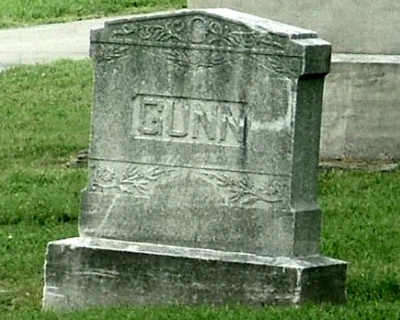
- George H. Gunn memorial, Find a Grave. Useful as a lead for death and service information; the memorial/transcription contains an erroneous death year and should not be treated as the sole authority for chronology.
- National Archives and Records Administration, Records of the Office of the Surgeon General (Army), Record Group 112. Potential source for Gunn’s appointment, examination, correspondence, and medical-officer records.
- National Archives and Records Administration, Records of the Adjutant General’s Office, Record Group 94. Post returns and Regular Army personnel records are potential sources for Gunn’s arrival at Fort Quitman, duty status, and death.
- Annual Register of the Commissioned and Warrant Officers of the United States Army, editions surrounding 1869–1871. These remain priority sources for establishing the exact date and nature of Gunn’s Army appointment.
Research Notes
Several important questions remain open and should not be filled by inference:
- Medical education: No securely identified medical-school catalogue or graduation record has yet been located. Harvard, Berkshire Medical College, the University of Vermont, Albany Medical College, and other northeastern schools remain candidates for systematic catalogue checking, but none should be attributed to Gunn without a matching record.
- Army appointment: His status as “G. H. Gunn, Assistant Surgeon, U.S.A.” at Fort Quitman is directly documented. The exact appointment or commission date remains to be verified from the Army registers or personnel records.
- Earlier military service: No verified Civil War service has yet been established for this George H. Gunn. His age makes wartime service possible, but possibility is not evidence.
- Cause of death: Unknown in the sources presently verified. Fort Quitman post returns, Army medical returns, or Gunn’s personnel file may resolve it.
- Burial: The later memorial record should be checked against cemetery, reinterment, or military burial documentation.
- Family: Parentage, siblings, marriage, and children should be reconciled against primary Massachusetts records and the project’s genealogical database before publication.
- Professional record: Gunn’s December 1870 report is currently the strongest primary evidence of his actual medical practice and should remain central to the biography.
Footnotes
-
George Henry Gunn’s birth and death dates are preserved in the project’s genealogical record and later memorial material. His Army medical status is independently established by the Surgeon General’s publication cited below. ↩
-
U.S. Army, Surgeon General’s Office, A Report of Surgical Cases Treated in the Army of the United States from 1865 to 1871 (Washington, DC: Government Printing Office, 1871), case CCCLVIII, report by “G. H. Gunn, Assistant Surgeon, U.S.A.,” Fort Quitman, Texas. ↩ ↩2 ↩3
-
Ibid., case CCCLVIII, “Report of Case of Contusion, with Rupture of the Liver and Kidneys,” concerning Private Henry Greene, Company H, 9th U.S. Cavalry, admitted at Fort Quitman on December 15, 1870. ↩ ↩2
-
The 9th Cavalry was one of the Regular Army’s Black cavalry regiments created after the Civil War. Gunn’s own report identifies Greene as a member of Company H, 9th Cavalry. The report documents the medical encounter but provides no basis for attributing broader political or racial views to Gunn. ↩
-
“George H. Gunn,” memorial, Find a Grave, identifying him as an Assistant Surgeon in the United States Regular Army who died on active duty. The associated transcription gives an impossible death year of 1838; Gunn’s 1840 birth, stated age of thirty-one, and the documented December 1870 Fort Quitman case support May 29, 1871. The memorial should be supplemented with Army death or post records before final scholarly publication. ↩ ↩2