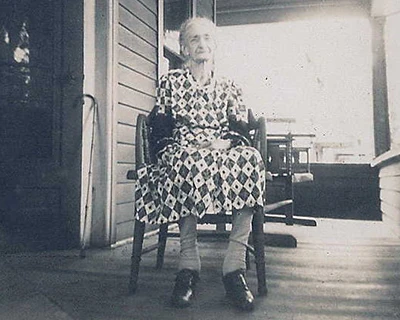
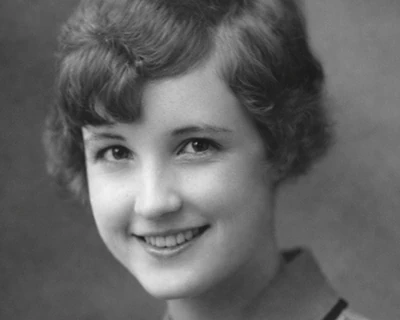
Henry H. Gunn
Civil War Sergeant, Ohio Farmer, and Witness at Deep Bottom
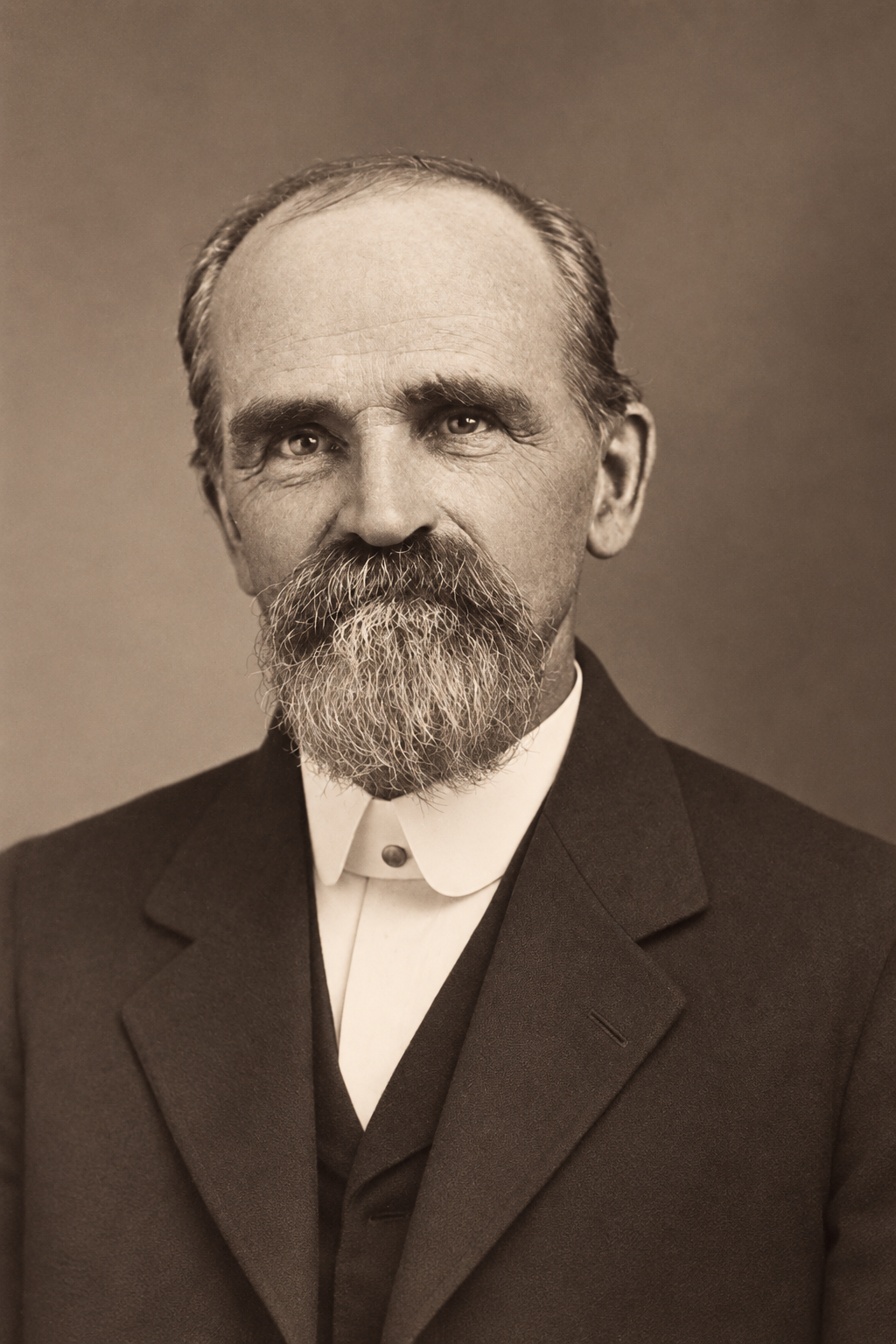
Henry H. Gunn lived for eighty-eight years, more than sixty of them after the Civil War. He married, raised seven children, and spent much of his adult life farming in Fulton County, Ohio. Yet one day in August 1864 left behind the most extraordinary surviving record of his life.
On August 16, 1864, Henry was serving as a sergeant in Company I of the 67th Ohio Volunteer Infantry when his uncle, George Almon Gunn, serving in the same company, was killed during the fighting at Deep Bottom, Virginia.
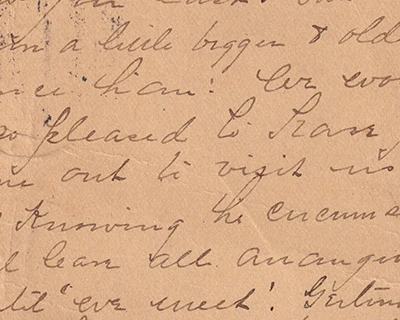
The following day, still in the field and with firing continuing along the lines, Henry sat down to write George’s widow, Rhoda.
The letter survives.
Written on August 17, 1864, it transforms Henry from someone remembered merely as a witness to his uncle’s death into something much rarer: a soldier whose own words carry us directly onto the battlefield.1
Two Old Family Lines
Henry H. Gunn was born August 21, 1840, in Ohio, the son of Charles Oscar Gunn and Martha Day Gunn.2
His father belonged to a branch of the Gunn family that had moved west from the Connecticut River Valley into Ohio. Charles Oscar Gunn, born at Montague, Massachusetts, in 1809, was a son of Henry Gunn and Tirzah Morley Gunn. Charles’s younger brother, George Almon Gunn, born in 1823, was therefore Henry’s uncle—the man beside whom Henry would later serve in the Civil War.3
Henry’s ancestry carried another, older connection to the Gunn family through his mother.
Martha Day was a direct descendant of Robert Day (1604–1648), an early settler of Hartford, Connecticut. Robert was also the father of Sarah Day, who married Nathaniel Gunn, son of Jasper Gunn. Sarah and Nathaniel became the parents of Deacon Samuel Gunn (1662–1755), through whom the principal Gunn line followed in The Gunns in America continued.3
The marriage of Charles Oscar Gunn and Martha Day therefore reunited descendants of two families whose histories had already crossed in seventeenth-century New England. Henry inherited the Gunn name through his father while also descending through his mother from the Day family that had been connected to the Gunns for generations.
It is the kind of recurrence that appears throughout early American genealogy: families divide into separate branches, migrate, and sometimes meet again generations later.
Growing Up in Ohio
Henry grew up in northwestern Ohio as the region developed into an agricultural landscape of farms and small communities.
His generation also came of age while the national dispute over slavery and its expansion into the western territories moved steadily toward crisis. Henry was twenty years old when Confederate forces fired upon Fort Sumter in April 1861.
The conflict that had occupied newspapers, churches, legislatures, and political campaigns became war.
Henry entered the Union Army.
The 67th Ohio Volunteer Infantry
Henry served in Company I of the 67th Ohio Volunteer Infantry, eventually holding the rank of sergeant. His uncle George Almon Gunn served as a private in the same company.4
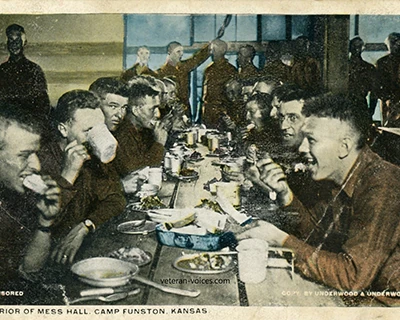
The 67th Ohio entered Federal service during the winter of 1861–62. Its wartime movements eventually carried the regiment from the Shenandoah Valley and Virginia Peninsula to South Carolina and then back to Virginia.
During 1863, the regiment participated in operations against Charleston, including the assaults against Fort Wagner on Morris Island. In 1864 it returned to Virginia and joined the Army of the James, participating in operations around Bermuda Hundred and the approaches to Richmond and Petersburg.5
By August, the regiment had moved north of the James River as part of Union operations intended to threaten Richmond and force Confederate troops away from Petersburg.
There Henry and George entered the fighting at Deep Bottom.
Deep Bottom
The 67th Ohio crossed the James River on August 13, 1864.
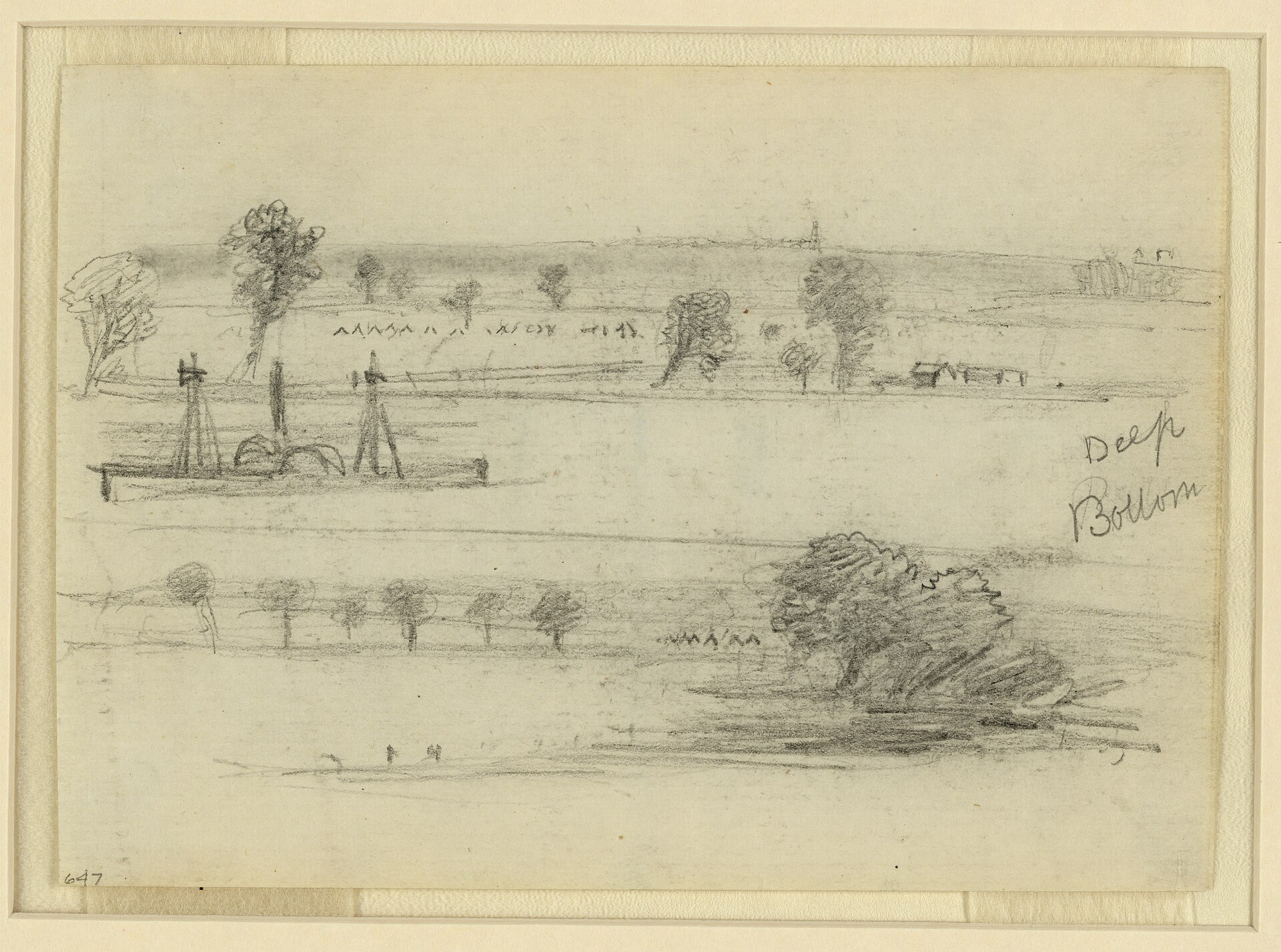
Henry’s own letter gives us the movement in the language of a soldier rather than a later military history:
“We left our camp on the south side of the James River and crossed the pontoon bridge to the north side the 13.”1
There was skirmishing on August 14. The regiment then moved farther inland, leaving its knapsacks behind.
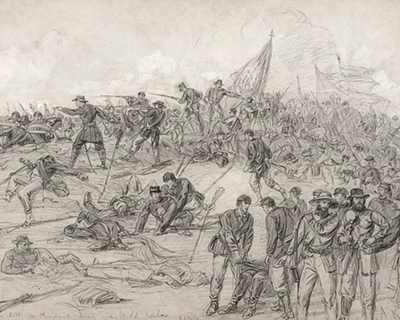
By August 16, Union and Confederate forces were engaged in hard fighting north of the James. The 67th Ohio participated in the Deep Bottom and Strawberry Plains operations of August 13–20.5
Henry described what happened next:
“Yesterday we charged on the rebels breastworks. We routed the rebels from them and held them for some time, when down came the rebels in heavy force and we was ordered to fall back.”1
The fight became close and confused. Henry wrote that the Confederates had a crossfire upon them and complained that the men on their flanks had failed to perform their duty.
It was during this fighting that George Almon Gunn was killed.
“O how I wish he was at home”
Henry wrote to Rhoda on August 17, 1864, only a day after George’s death.
He did not delay the terrible news:
“Your husband was killed yesterday in a pretty hard fight in which we had with the enemy.”1
He then told her what had happened.
George had been shot at the Confederate earthworks. According to Henry, the ball entered near the left breast and passed out through his back. Because the Union troops had been ordered to withdraw, George’s body remained behind in ground held by the enemy.1
“As you see, he lays in the enemys hands. O how I wish he was at home.”
— Henry H. Gunn to Rhoda Gunn, August 17, 18641
Few surviving lines in the Gunn family record collapse the distance between war and home so completely.
Henry was not writing history. He was a twenty-three-year-old soldier trying to tell his aunt that her husband was dead and that he could not even bring the body back to her.
The military fact and the family grief occupy the same sentence.
George’s Last Possessions
Henry had managed to recover some of George’s personal belongings.
He wrote:
“I have got Uncles wallet with 7 Dollars, two Cent books, & a pocket nife & a looking glass.”1
He hoped to send the belongings to Rhoda but could make no promise.
“I know not what a day will bring fourth,” he wrote.1
The sentence was not rhetorical. Henry remained in the field, and he noted that firing could still be heard along the line as he wrote.
The objects themselves are modest—a wallet, seven dollars, two small books whose exact description remains uncertain in the manuscript, a pocketknife, and a looking glass. Yet their survival within Henry’s account gives George’s death an intimacy that casualty rolls cannot provide.
These were the things a man had been carrying when he died.
Henry gathered them for his family.
“One of Our Best Men”
Henry’s letter also preserves testimony about George from the soldiers who served beside him.
“All the boys says we have lost one of our best men and a Christian if there ever was one.”1
He added:
“He was thought a great deal of in the Regt.”1
Those lines tell us something that the military record cannot. They speak not simply to the circumstances of George’s death but to the way he was regarded by the men who knew him in service.
Henry was writing to comfort Rhoda, but in doing so he preserved the judgment of George’s comrades.
Near the end of the letter, Henry apologized for its disorder and asked Rhoda to consider where he was and how he was situated.
“This is truly a sorrowful time, Rhoda,” he wrote.1
The full four-page letter is preserved in the Voices section of The Gunns in America, where the manuscript and complete reading transcription can be examined together.
The War Continued
George’s death did not end Henry’s military service.
The 67th Ohio remained on active duty through the closing campaigns of the war. After Deep Bottom came further operations north of the James, including New Market Heights and Chaffin’s Farm, Darbytown Road, and Fair Oaks. The regiment spent the winter in the defenses north of the James before joining the final campaign in the spring of 1865.5
The 67th participated in the operations culminating in the fall of Petersburg and the pursuit of Robert E. Lee’s Army of Northern Virginia during the Appomattox Campaign. It was present during the campaign that ended with Lee’s surrender at Appomattox Court House on April 9, 1865.5
The regiment remained in Virginia for occupation and guard duty after the fighting ended and was finally mustered out on December 12, 1865.5
Its losses had been severe. Regimental records report 11 officers and 131 enlisted men killed or mortally wounded and another officer and 150 enlisted men lost to disease—a total of 293 deaths during service.5
Henry was among the survivors.
He returned to Ohio carrying something casualty lists and official histories could not record: the memory of having gone into battle with his uncle and returned without him.
Home from War
Henry’s civilian life would ultimately be far longer than his military one.
He married Henretta Halsey (1845–1928), and within a few years of the war the couple had begun raising a family.6
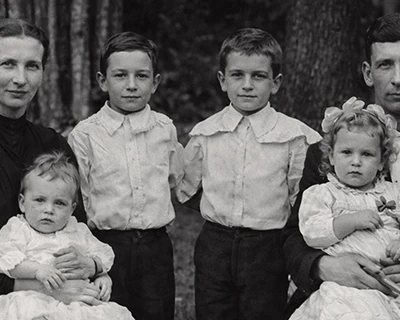
Henry and Henretta became the parents of seven children:
- Orra Henry Gunn (1867–1939)
- Willard Austin Gunn (1869–1892)
- Charles W. Gunn (1872–1949)
- Howard William Gunn (1874–1953)
- Bradley Chester Gunn (1876–1943)
- Elda J. Gunn (1881–1969)
- Alfred Benton Gunn (1883–1955)6
Their household carried this branch of the Gunn family into another generation and ultimately into the twentieth century.
There was loss within that household as well. Their son Willard Austin Gunn died in 1892 at only twenty-three years of age.6
Henry, who had survived the death of men around him during the war, now experienced the very different grief of outliving one of his own children.
Farmer of Amboy Township
Federal census records provide a remarkably consistent picture of Henry’s working life after the war.
The 1870, 1880, and 1900 United States censuses identify Henry as a farmer in Amboy Township, Fulton County, Ohio.7
Farming was therefore not merely something Henry did briefly upon returning from military service. It became the central occupation of several decades of his adult life.
His world was one of fields, livestock, planting and harvest, family labor, and the seasonal routines of rural northwestern Ohio.
Census records are spare. They give us names, ages, relationships, occupations, and household information rather than personality. Yet taken together they reveal the shape of Henry’s postwar life.
The soldier came home.
He married.
He raised children.
He worked the land.
Later census evidence suggests that Henry eventually withdrew from active farming as he entered old age.8
His life after Deep Bottom lasted more than six decades.
A Life Across Two Americas
Henry was born in 1840 into a country still overwhelmingly rural.
He grew up before the Civil War, before completion of the transcontinental railroad, and before electric lighting, automobiles, telephones, airplanes, or radio became part of ordinary American life.
As a young soldier he crossed the James River on a pontoon bridge and sent battlefield news home with ink and paper.
By the final years of his life, automobiles traveled Ohio roads. Telephones linked homes and businesses. Commercial radio carried voices across distances that once required days of travel. Airplanes had crossed the Atlantic, and another generation of American soldiers had already fought a war in Europe.
Henry had lived from the antebellum republic into the modern age.
Henretta and Henry
Henry and Henretta remained together into 1928.
After more than six decades of marriage, Henretta Halsey Gunn died in 1928.
Henry followed approximately five months later, dying in Toledo, Ohio, in November 1928, at the age of eighty-eight.9
His long life had encompassed war, farming, marriage, seven children, the death of a son, and the transformation of the country in which he had been born.
Yet among the surviving documents of those eighty-eight years, none brings Henry closer to us than the letter he wrote at twenty-three.
The Man Who Came Home
George Almon Gunn and Henry H. Gunn entered one part of American history together.
Their stories divided at Deep Bottom.
George’s life ended there on August 16, 1864.
Henry’s continued for another sixty-four years.
That difference gives Henry a particular place in The Gunns in America. He should not be remembered merely as the nephew standing beside George in a Civil War story.
Henry became the person who carried the battlefield back to the family.
He gathered his uncle’s belongings. He wrote to Rhoda. He told her what had happened when George fell, where his body remained, and what the other soldiers said about him.
Then Henry survived the war and returned to Ohio.
He became a husband, a father, and a farmer.
Military histories record Deep Bottom through brigades, regiments, objectives, advances, and withdrawals. Henry’s letter records something else.
It records what war looked like when one member of a family had to tell another that someone they loved was not coming home.
Family
Parents
- Charles Oscar Gunn (1809–1871)
- Martha Day Gunn
Maternal Ancestry
Martha Day was a direct descendant of Robert Day (1604–1648) of Hartford, Connecticut. Robert was also the father of Sarah Day, wife of Nathaniel Gunn and mother of Deacon Samuel Gunn (1662–1755).
Spouse
- Henretta Halsey Gunn (1845–1928)
Children
- Orra Henry Gunn (1867–1939)
- Willard Austin Gunn (1869–1892)
- Charles W. Gunn (1872–1949)
- Howard William Gunn (1874–1953)
- Bradley Chester Gunn (1876–1943)
- Elda J. Gunn (1881–1969)
- Alfred Benton Gunn (1883–1955)
Uncle
- George Almon Gunn (1823–1864), Private, Company I, 67th Ohio Volunteer Infantry; killed at Deep Bottom, Virginia, August 16, 1864
Military Service
| Detail | Record |
|---|---|
| Allegiance | United States |
| Army | Union Army |
| Regiment | 67th Ohio Volunteer Infantry |
| Company | Company I |
| Rank | Sergeant |
| Campaign of particular family significance | Second Deep Bottom |
| Uncle serving in same company | George Almon Gunn |
| George killed | August 16, 1864 |
| Letter to Rhoda Gunn | August 17, 1864 |
| Final major campaign | Appomattox Campaign |
| Survived war | Yes |
Voices
Henry H. Gunn to Rhoda Gunn, August 17, 1864
Written from the Army of the James one day after George Almon Gunn’s death, Henry’s four-page letter is a surviving first-person account of the fighting at Deep Bottom.
It describes the regiment’s crossing of the James River, the charge against Confederate breastworks, George’s death, the recovery of his personal possessions, and the esteem in which he was held by his fellow soldiers.
Read the complete letter in Voices →
Research Note
Henry’s August 17, 1864 letter is now the principal primary source for the Gunn family’s account of George Almon Gunn’s death.
Its importance rests partly in its timing. Henry wrote one day after the battle, while still in the field and while firing continued along the lines. His account is therefore not a later reminiscence shaped by decades of memory. It is a contemporary communication from a participant attempting to explain to a widow what had happened to her husband.
For that reason, the letter should form the evidentiary foundation for the Deep Bottom sections of both Henry H. Gunn’s and George Almon Gunn’s biographies, as well as the treatment of George’s death in Chapter 18 of The Gunns in America.
Henry’s Civil War pension file remains an important research target. It may provide additional evidence concerning his military service, health, marriage, occupation, residences, and later life.
Footnotes
-
Henry H. Gunn to Rhoda Gunn, August 17, 1864, Army of the James, Virginia, four-page manuscript letter, family collection. Original manuscript retained for provenance; reading transcription prepared for The Gunns in America. All quotations concerning the crossing of the James River, the attack on the Confederate breastworks, George Almon Gunn’s death and personal possessions, and the opinion of his fellow soldiers are taken from this letter. ↩ ↩2 ↩3 ↩4 ↩5 ↩6 ↩7 ↩8 ↩9 ↩10 ↩11
-
Family genealogical records for Henry H. Gunn record his birth on August 21, 1840, in Ohio, and identify his parents as Charles Oscar Gunn and Martha Day Gunn. ↩
-
Gunn and Day family genealogical records. Martha Day Gunn descended from Robert Day (1604–1648) of Hartford. Robert Day’s daughter Sarah Day married Nathaniel Gunn, son of Jasper Gunn, and became the mother of Deacon Samuel Gunn (1662–1755). Charles Oscar Gunn descended through the Montague branch of the Gunn family and was the brother of George Almon Gunn. ↩ ↩2
-
Civil War military records for Henry H. Gunn and George Almon Gunn, Company I, 67th Ohio Volunteer Infantry. Henry served as a sergeant; George served as a private. ↩
-
Larry Stevens, comp., “67th Ohio Infantry,” Ohio in the Civil War, drawing in part upon Whitelaw Reid, Ohio in the War: Her Statesmen, Her Generals, and Soldiers, vol. 2 (Cincinnati: Moore, Wilstach & Baldwin, 1868). The regimental service history records the 67th Ohio at Fort Wagner, Bermuda Hundred, Deep Bottom and Strawberry Plains, New Market Heights, Chaffin’s Farm, Darbytown Road, Fair Oaks, Petersburg, and the Appomattox Campaign; it also records the regiment’s muster-out on December 12, 1865, and total wartime deaths of 293. ↩ ↩2 ↩3 ↩4 ↩5 ↩6
-
Gunn family records for Henry H. Gunn and Henretta Halsey Gunn and their children: Orra Henry Gunn (1867–1939), Willard Austin Gunn (1869–1892), Charles W. Gunn (1872–1949), Howard William Gunn (1874–1953), Bradley Chester Gunn (1876–1943), Elda J. Gunn (1881–1969), and Alfred Benton Gunn (1883–1955). ↩ ↩2 ↩3
-
U.S. Census Bureau, Ninth Census of the United States, 1870; Tenth Census of the United States, 1880; and Twelfth Census of the United States, 1900, Amboy Township, Fulton County, Ohio. These schedules identify Henry H. Gunn as a farmer. ↩
-
Later United States census records for Henry H. Gunn indicate that he was no longer actively engaged in farming, consistent with retirement in old age. ↩
-
Ohio death and family records for Henry H. Gunn and Henretta Halsey Gunn. Henretta died in 1928; Henry died in Toledo, Ohio, in November 1928, approximately five months later. ↩