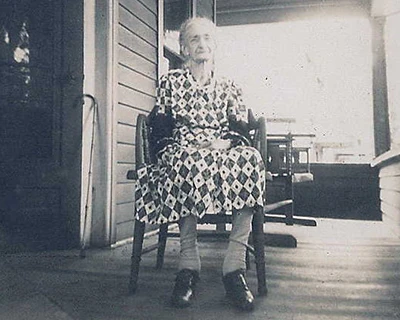
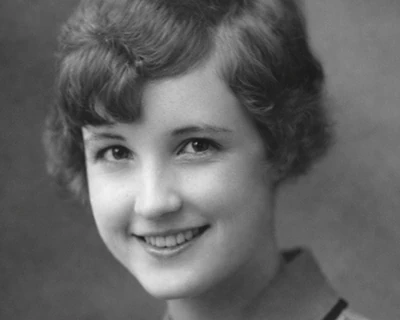
An Interesting Piano
A family narrative from the Gunn papers, told — unusually — in the voice of the piano itself, and presented here as written. Notes on the authorship, the instrument, the family, and an unexpected literary connection follow the text.
Source: Gunn family papers
I am a piano.
As I rest here in a corner of an Illinois museum, I am musing about days gone by. My keys are silent — no one plays me anymore. Over there is the buggy in which Abe Lincoln rode to the Lincoln–Douglas debates. We are both pretty well forgotten.
Some of the younger generations are interested in my story and would like to know how I fit into their family history.
Their great-great grandfather, who lived in Massachusetts, came with a group of his adventurous friends to the Illinois frontier back in the early eighteen hundreds (maybe 1830).
In time this young man met, fell in love, and married Nancy, the daughter of a pioneer from Ohio.
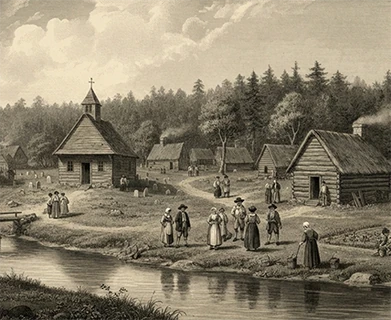
It is told that Nancy and great-grandfather made their first home in a little log house. Nancy had to carry water from a nearby spring.
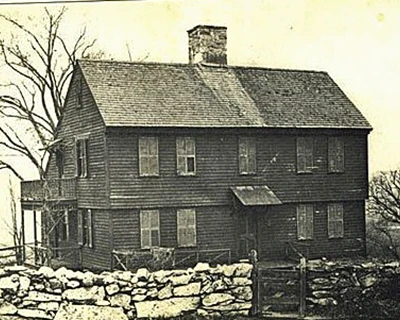
As time went by, and they prospered, the young husband decided to build a house patterned after his home in Massachusetts.
No one knows how Nancy learned music or how to play the piano, but she longed for a piano for their new home. So the great-grandfather ordered a small grand piano from a firm in Boston.
It was a lovely instrument — an early style grand piano, rectangular in shape and crafted of glowing rosewood. In the interior the sound board was embellished with polished brass fruit and flowers. (An aged aunt said she used to have to dust these!)
At this time the famous Swedish soprano, Jenny Lind, was in this country giving concerts. In Boston a good piano was needed to accompany her in her concert, and the great grandmother’s grand piano was pressed into service for the event. It was shipped across Massachusetts, down the Erie Canal, and on to Chicago. In Chicago the piano was put on display as having been used in the concerts given by Jenny Lind, the “Swedish Nightingale.” Then, amazingly, the piano was shipped by covered wagon to great-grandfather’s farm home.
For many years it graced Nancy’s parlor. She enjoyed playing it, and many of her children and grandchildren practiced their music lessons on it. A great aunt often stated that the box the piano came in was her childhood playhouse.
It was eventually bequeathed to the county historical society, and when they built their new museum it was given a place of honor.
That is my story.
More than a hundred years later, three great-granddaughters made the trip from Kansas to visit the area where their ancestors had lived. They visited the museum to see “the piano.” The curator opened the lid and showed them the elaborate interior. The cover of the padded stool had long since worn away. One of the cousins asked if she might make a needlepoint cover for it. Permission was granted, and when the piece was finished the great-granddaughters made another sentimental journey back to Illinois to deliver it.
Yes, I am a piano. But I have not been forgotten. I really still belong to a family’s memories and am truly a part of their family history.
This account was set down by the three great-granddaughters who appear in it — Marjorie Corbin Ralston, Lois Corbin Smith, and Mary Alice Holladay Sies — the visitors from Kansas who saw the piano at the museum and gave it the needlepoint cover it wears today.
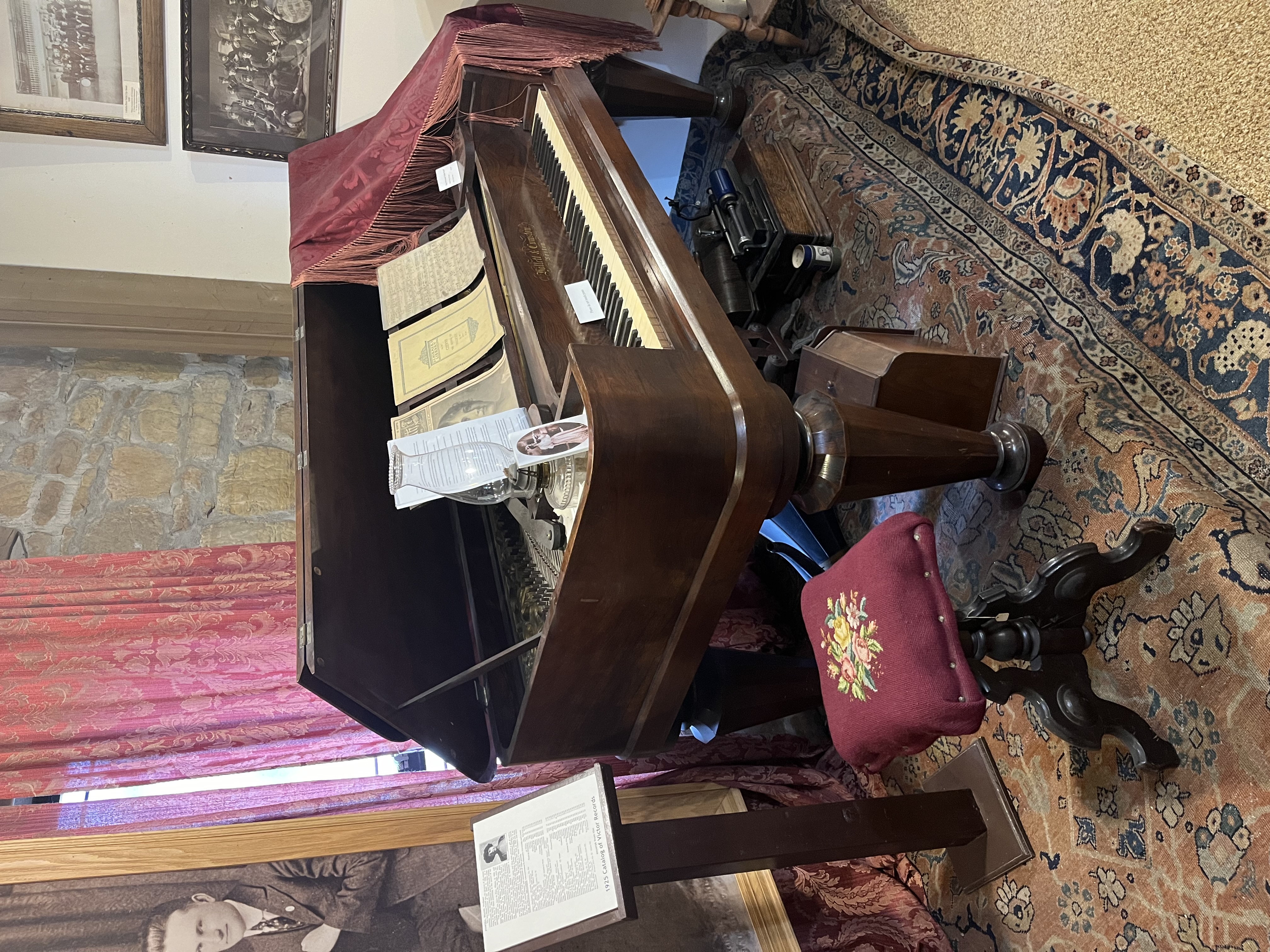
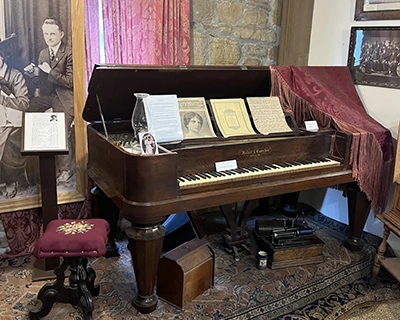
The piano today, at the LaSalle County Historical Society Museum, Utica, Illinois. The needlepoint stool cover, made by Lois Corbin Smith, is visible in front. Courtesy of the LaSalle County Historical Society.
The Family in This Story
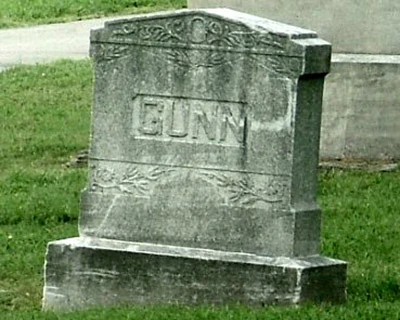
- The great-grandfather — Aaron Gunn
- The great-grandmother — Nancy Winters Gunn
- The great aunt — Ruth Gunn Hobert
- The three great-granddaughters — Marjorie Corbin Ralston, Lois Corbin Smith, and Mary Alice Holladay Sies
- Lois Smith made the needlepoint cover for the stool — the burgundy floral cushion still on the piano today.
The piano is held by the LaSalle County Historical Society Museum in Utica, Illinois.
The Instrument
The piano’s nameboard identifies its maker: Hallett & Cumston of Boston. The firm took that name around 1850 and used it until roughly 1879, when it was absorbed into Hallet, Davis & Company; the older double-t spelling on the nameboard fits an instrument from those decades. It is a square grand — the “rectangular” form the family narrative describes — of the kind Boston makers turned out in quantity in the mid-nineteenth century.
That dating quietly reorders the family’s timeline. The piano cannot predate about 1850, which places its purchase well after the frontier years the story opens with: the log house, the spring, the New England–style house built once the Gunns had prospered, and only then the piano ordered from Boston. The “maybe 1830” of the story belongs to Aaron’s arrival, not to the instrument.
A Dickinson Connection
The piano’s story turns on Jenny Lind, the Swedish soprano whose 1850–51 American tour, promoted by P. T. Barnum, was among the most feverish public events of the age — theaters, streets, and even furniture were named for her. Family tradition holds that the Gunn piano was pressed into service for a Lind concert in Boston before it made its way west. The dates at least cohere: Hallett & Cumston took its name around 1850, and Lind sang in Boston in 1850 and 1851, so the maker and the tour overlap in the same city at the same moment. The specific loan remains family tradition rather than documented fact, but it is not chronologically impossible.
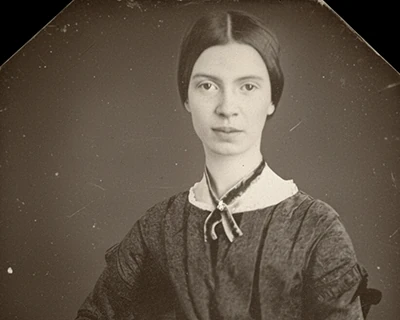
A second Gunn thread runs through the very same tour. Emily Dickinson’s paternal grandmother was Lucretia Gunn (1775–1840) of Montague, Massachusetts, who married Samuel Fowler Dickinson, a founder of Amherst College. On July 3, 1851, the twenty-year-old poet attended Lind’s concert at the Edwards Church in Northampton, with her father and sister — having a month earlier declined her brother Austin’s invitation to hear the singer in Boston. Her verdict, written to a friend, was characteristically her own: “Herself, and not her music, was what we seemed to love.”
Lucretia Gunn and Aaron Gunn were first cousins. The family tree traces both to one grandfather, Lieutenant Nathaniel Gunn Jr., Deacon (1726–1807): Lucretia through his son Captain Nathaniel Gunn (1752–1832), Aaron through another son, Deacon Elihu Gunn (1763–1851). That makes Aaron Gunn a first cousin twice removed of Emily Dickinson. Two branches of one family, almost certainly unaware of one another, were drawn into the orbit of the same singer within a single year — one branch sending a Boston piano west to the Illinois prairie, the other seated in a Northampton church in the rain.
Sources
- “An Interesting Piano,” family narrative, Gunn family papers.
- Hallett & Cumston / Hallet, Davis & Co. firm history (Boston, est. 1835; “Hallet & Cumston” partnership c. 1850–1879).
- Emily Dickinson Museum, “Samuel Fowler Dickinson (1775–1838) and Lucretia Gunn Dickinson (1775–1840), grandparents.”
- Emily Dickinson to Abiah Root, July 1851 (Letter 46), on the Northampton concert.
- Gunn family tree: descent of Lucretia Gunn and Aaron Gunn from Lt. Nathaniel Gunn Jr. (1726–1807) through his sons Capt. Nathaniel Gunn (1752–1832) and Deacon Elihu Gunn (1763–1851).
- LaSalle County Historical Society, Utica, Illinois (piano and photograph).