Living in La Salle: The Oral History of Carroll Gunn
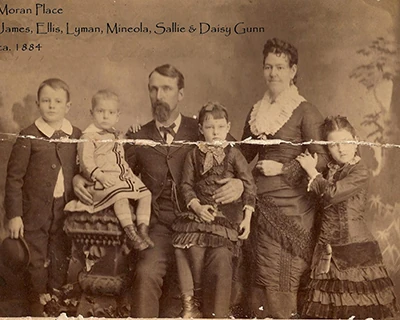
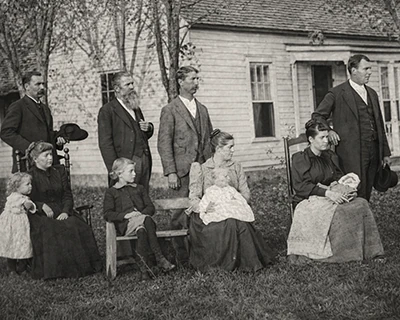
Carroll Gunn (born December 19, 1896, in La Salle, Illinois) was a grandson of Aaron Gunn and Nancy Winters Gunn and a son of Moses Gunn. He was interviewed at the La Salle Public Library on June 17, 1976, by Mrs. Benedict Pierski for the Starved Rock Library System Oral History Project. The tape was digitized under an Illinois Historical Records Preservation Grant awarded in 2013 to the Peru Public Library, whose assistance in providing the audio recording is gratefully acknowledged. The transcript below follows the library's 1976 typescript. Obvious typing errors have been corrected; the typist's word 'sediment' has been rendered as 'sentiment,' which is clearly what the speaker meant; words the transcriber left blank are shown as [inaudible]; and a few editorial clarifications appear in square brackets. Personal and place names are given as spelled in the typescript and have not yet been checked against the recording. Carroll read from prepared notes and went over several recollections twice, so some episodes appear in two versions. The transcript preserves the language of its time, including terms now considered offensive.
♪ Narrated by Carroll Gunn, in his own voice
The recording opens with an introduction by the interviewer.
This taping is taking place at the LaSalle Library. Making the introduction is Mrs. Benedict Pierski, patron and member on the Board of Directors of the LaSalle Library. The narrator is Carroll Gunn with a very interesting and fascinating story taking us back to practically the very beginnings of LaSalle; Carroll Gunn.
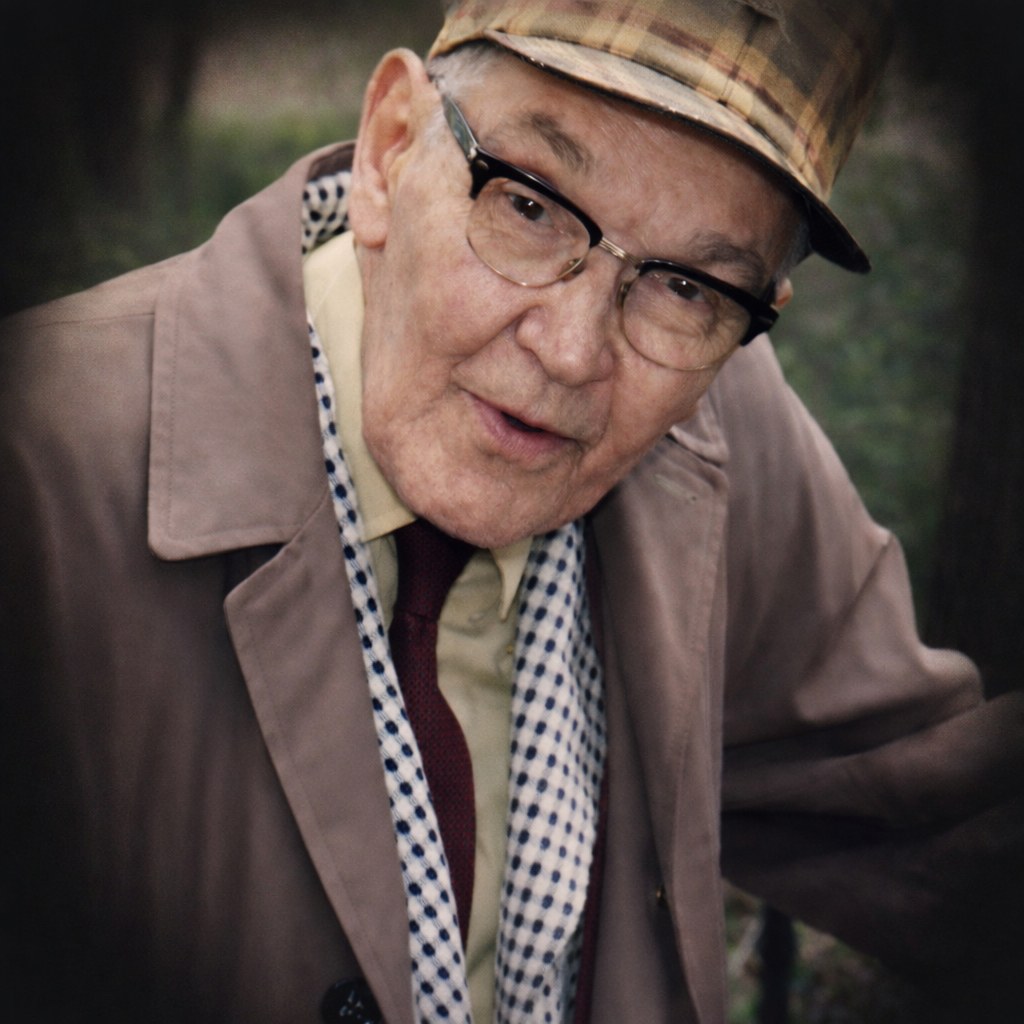
I suppose that a record of oral history should give the personal reminiscence of the speaker, but I think it would not be amiss to offer a few items of family tradition which have, I think, never appeared in print. Because my parents were married late in life, there was a double generation gap between them and us, so most of our first cousins seemed more like uncles and aunts. My father has said that when he was a school boy before the Civil War, he took many a licking because his father was an abolitionist. I would think that this sentiment prevailed not because of fondness on the part of local citizens from the institution of slavery, but from a fear that the negroes, if freed, would come north to compete with local laborers for jobs. Because of this anti-abolition sentiment, there was no station of the underground railroad in the LaSalle area, but my Aunt Mrs. Bell Williams has told of an occasion when a fugitive missing the route of the railroad came to my grandfather seeking help in his escape. My grandfather then put the man in a farm wagon, covered him with a load of loose straw or other farm produce, and took him to Troy Grove, then called, I think maybe you should turn that around, and took him to Homer, now called Troy Grove, where he could make connection with the underground.
The anti-negro sentiment remained in this area for many years, and I remember as a small boy when a young negro found himself in town near nightfall, my Uncle Clarence Bradley, who operated a coal company farm near Delzel, took the boy either to his farm or to the city of Spring Valley where there were a number of negro families. My earliest personal memory of anything of general interest was when in October of 1901 my mother showed to my brother and me a newspaper picture of our new president and his family. This was Teddy Roosevelt, who finished the term of William McKinley before serving an elected term. Maybe I should put in a clause there, who finished the term of the slayment of William McKinley, something there to illustrate. The family, at that time, lived in a house on the south east corner of 11th and Creve Coeur streets. It was, I believe, a short time later that we saw our first automobile chugging past the house. This, I think, belonged to the Matthesian family. We heard the next day that some of the neighbor boys had followed the car for about half a mile to the Jacobson farm, on what is now Airport Road. Airport Road, as I think most people know, was named for the airport established by Wayne Hummer and since discontinued. There is still another smaller airport somewhat farther north on the same road, I should say still operative. Shooting Park Road commemorates a shooting park and rifle range located on that road in north Peru. Gunn Avenue is a short street following a road established through my grandfather’s farm to permit the farmers north of town to bypass a swampy area, that they would have to travel, if they followed the already established route to reach their homes from the business section of the city. At the turn of the century, Aunt Lucy Chapman was managing the family farm for my grandmother, Nancy Gunn, a widow in her late 90’s.
Most of Aunt Lucy’s family were adults with homes of their own, but a teenage son, Joe, was making his home with her. In the fall of 1902, my uncle Tom Williams lost his life at a farm accident in Florida. Shortly after that, Aunt Dell Williams returned with her daughter and sons to the family farm. At some time in 1903, my mother was stricken with a severe illness and my sister and brother and I had to go and join my grandmother’s already large family. Aunt Lucy continued to run the farm until the passing of my grandmother. I remember the last time threshing was done on the farm. This was with a steam threshing engine operated by Uncle Clarence. The family at that time kept two cows, Whitey and Delzel, by name. The milking was done by hand by my teenage cousins. Sometimes as I stood watching, the milker would invite me to open my mouth while he squirted a stream of milk directly into it. In the summer of 1904, my mother had recovered sufficiently from her illness so that we were able to move into the house where we now live, built in 1876 by my Uncle Heman, Aunt Lucy’s husband. In the fall of that year, my brother and I were entered in the Lincoln school. My mother had not been able to send me at the usual age of 6 and I was almost 8 when I started. Because I had learned to read at home, I was started in a somewhat advanced class, while my brother was assigned to the beginners class, my sister was already in third grade.
Now going on from there. At the time when I started to school, much of the land north of 11th and west of St. Vincent’s, except for some houses along Creve Coeur and Charter street, was vacant. Beginning at 11th and extending north to O’Connor or Edwards Ave., I’m not sure which now, was a string of three ponds deep enough to swim in. Between these ponds are the east and the Creve Coeur street, on the west was the family farm. By the summer of 1905, my grandmother died and soon after that the farming was discontinued. At that time, my father took the cow Whitey as a part of his inheritance and built a barn for her at the rear of our lot. She later had a calf, which we named Cherry. So for awhile we had two cows. My father usually did the milking, but on occasional weekends when he was out of town serving his pulpit supply, the job was mine. My brother and I were also assigned the job, when we were not in school, of watching the cow while she was out in pasture. When I was in third grade, neither my brother nor I were doing well in school, so my mother took us out and sent us for tutoring to Miss May Hughes, a retired school teacher and a friend of the family, who lived at 833 Bucklin Street. While we were under her care, Miss Hughes took us on one occasion to the city park, now Polaski Park, but then the only park maintained by the city. In the center of the square was a small pool with a fountain, I think there were some fish in it but no big ones. An electric street car ran down Bucklin Street to First then over to LaHarpe and up to 9th and back to Bucklin. Boys attending the Jackson school about two blocks south of Miss Hughes home would sometimes put pennies on the track to be flattened out as the cars went by. Another trolley line, who ran from west Peru to 3rd and Bucklin down to First over Joliet up that street and St. Vincents to O’Connor and returned. The only other means of public transportation, public local transportation was by horse-drawn cabs and the city at that time had several livery stables which were later converted to garages, most of them I think were. Steam railroads serving this area at that time were the Rock Island, the Illinois Central and the C.B. & Q. There was also an electric inter-urban; the Chicago, Ottawa & Peoria which ran from Princeton to Joliet was first to Streator and Ladd.
When we kept cows, milk was sold at 7¢ a quart, but it was not pasteurized and the customer furnished his own container. Some of the milk I delivered, while some customers came to our home. One woman came in the evening at milking time to drink the fresh milk, as it was considered especially healthful. When immigrants came to town to work in the zinc factory and mine those who could build their homes located them on the eastside of town to be near the factory. The Grant school was located in the part. The picnics, at that time, or the picnics of the baptist Sunday school were usually held in Mitchell’s Grove, though at times, several other locations were tried out for variety. At one time, the picnic was held at Starved Rock not yet made a state park, but our family and some others thought the location too dangerous for children and we held a party at the old family home. Now I think that’s all that I have prepared.
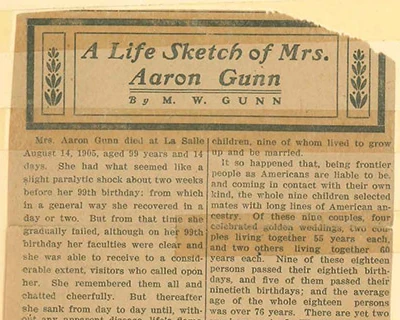
I suppose that an oral record of history should center around the personal recollections of the speaker, but I think a few words of introduction will not be amiss. Much of the story of my grandfather, Aaron Gunn, will be found in a book published in 1911 by W. T. Bedsford to celebrate his 20th anniversary as publisher of the LaSalle Daily Tribune. I should like, however, to correct the statement designated in the company with which Aaron came from Massachusetts. Although the colony was formed in Massachusetts, the name they took was the Hampshire colony from the name of the county where they were organized. This colony at the time of their formation, also organized the Hampshire colony congregational church which they brought with them to Princeton, Ill. In the Princeton Public Library is a book giving the detailed history of that church.
Some additional information concerning my grandfather is given in volume 2 of the biographical and genealogical index of LaSalle county, published in 1901. Volume 1 of the biographical index can also be found information concerning my father, Moses, to the age of 60. Tradition reports my father as saying, that as a boy, he took many a licking because his father was an abolitionist. The anti-abolitionist sentiment of the community rose, I think, not from the attachment of local people to the institution of slavery, but from a fear that the negroes, if freed, would come north to compete with local laborers for jobs. Due to the prevailing sentiment, this town did not have a local station of the underground railroad, but my Aunt Mrs. Bell Williams has told of a time when a fugitive slave missing the regular route of the underground came to my grandfather for help. My grandfather, she has told, put the man in a farm wagon, covered him with loose straw or other farm produce and took him to the village of Homer, since renamed Troy Grove, where he could make connections with the regular route of escape. This anti-negro sentiment persisted throughout here for many years after the Civil War and I remember an occasion when a negro boy found himself in LaSalle near nightfall. My Uncle Clarence Bradley, who operated a coal company farm near Delzel, took the boy either there or to Spring Valley where a number of negro families lived. Before I continue, I should like to tell of a small card that I found some years ago among my father’s papers. It was a folded card with the front pictured a woman reading a letter beside a window. Through the window could be seen a mailman making his rounds. The outside was printed in pink and soft blue, the inside of the card announced the inauguration of city home delivery. The date was 1892. The delivery staff consisted of 4 men, two of these men were Fred Snow, father of Norman Snow and William Young, an uncle of Mrs. Victor Vermont. The other two were, I believe, Mr. Berckhart and Mr. Witlum. This announcement must have been sent to each house holder in the delivery district and some old families may still have a copy. Before the LaSalle County historical museum in Utica was founded, I turned my copy over to local postmaster, but there has been several changes in the local post office since then and the card seems to have been lost. If some family should find a copy of the card, I think it would be most appropriately kept in the care of the LaSalle Library or the LaSalle county museum of Utica.
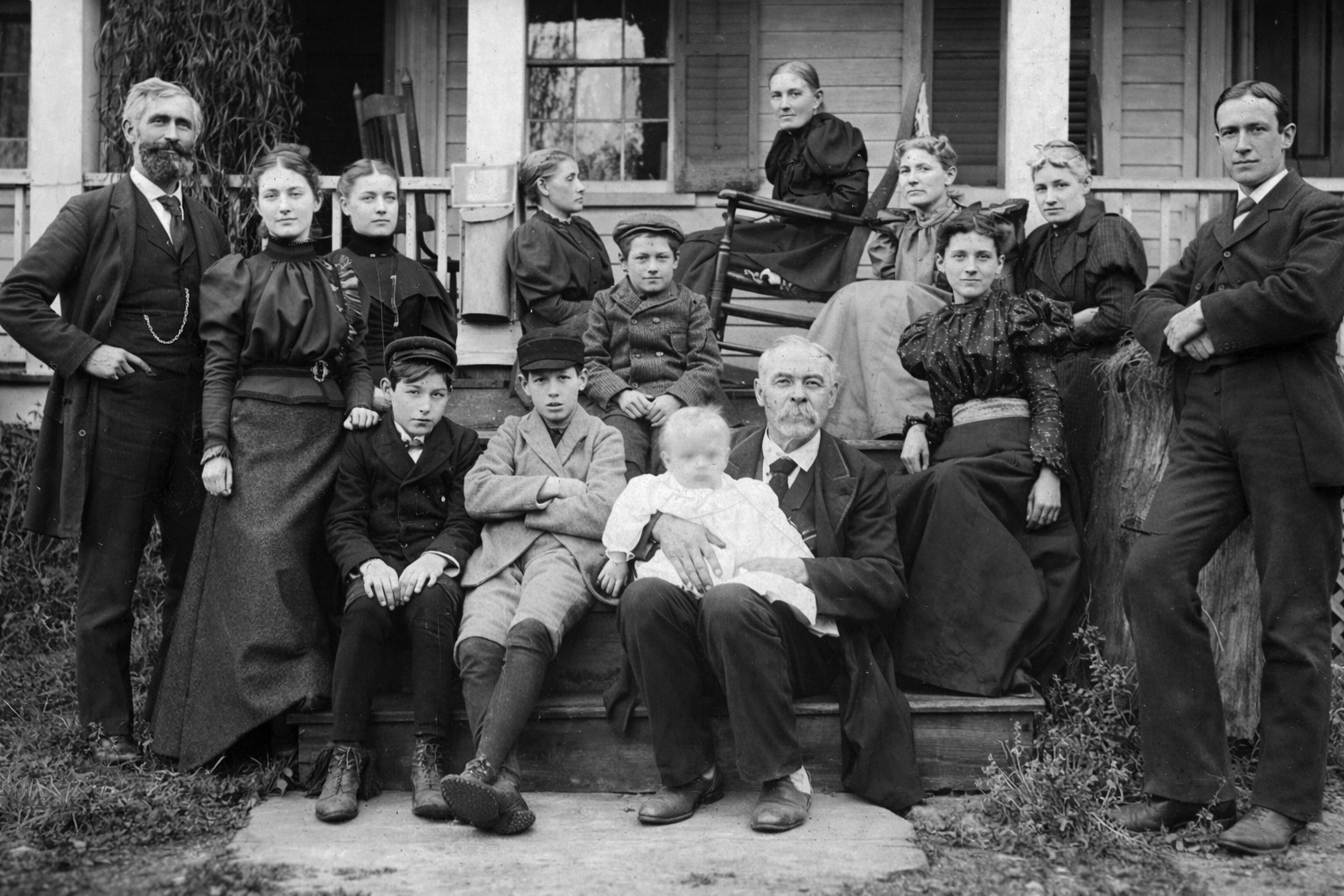
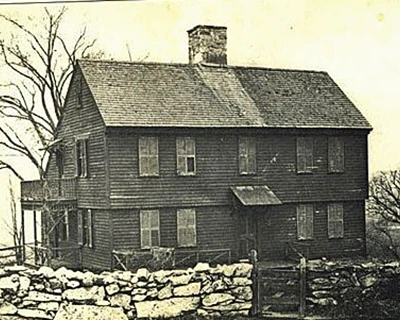
Now I was born in 1896 in my grandparents home. The house for many years was listed as 1174 Creve Coeur Street, LaSalle, but recently a small house was built in what was then the front yard and the new house was given the number 1174 Creve Coeur and the old grandfather’s house was re-numbered since it now faced Linton Ave., it was given the number 1221 Linton Ave. Now I might say that since my parents were married late in life there was a double generation gap between them and us children. In 1897 my parents moved to a house on Wright Street between 7th and 8th. We did not stay in that house for more than a year or two when we moved to 819 Creve Coeur Street. We next moved to the house on the southeast corner of 11th and Creve Coeur. Here began the earliest experiences to which I can fix any date. My first introduction to any event of public interest was the occasion when my mother showed to my brother and me a newspaper picture of the new president, Theodore Roosevelt with his family after the shooting of President McKinley. It is also about this time that I first saw an automobile. The car came chugging along 11th Street and turned north on Creve Coeur. We heard later that some of the neighbor boys had followed it as far as Jacobson’s farm about a ½ mile north. There was, I believe, no sanitary sewer system at that time, unless in the business district. The scavenger came when called to remove the contents of the [inaudible] and there was no garbage collection.
Chickens and other live stock consumed much of the leftovers from the kitchen. Many people kept chickens, and dog food was unheard of. Cats or dogs were fed from table scraps or caught their own foods. Some people kept horses for business or pleasure. I remember, R.M. Newsted, our clothing dealer, riding by from time to time on horse back with two or three of his friends. Mr. Newsted built and occupied for many years the store on 2nd and Marquette, later occupied by [inaudible] LaSalle super market, but now torn down for the use of National bank patrons. Another clothing dealer M.L. Con kept a Shetland pony and cart for his little daughter Dorothy. The Con store was located on the south side of 1st street which was then between the banks. The state bank occupied the same corner where it’s now located, though in an older building. The National bank was about ½ block west. Besides his clothing store, Mr. Con also operated a [inaudible] bank. Mrs. Con was an early day practitioner of Christian Science and ministered to my mother during her severe illness. The Con’s daughter, Dorothy, was for many years a school mate of my sister. In 1910 the Cons moved to South Bend, Ind. Dorothy later became a staff writer for the Christian Science Monitor. At one time she wrote for the Monitor a series of articles on small midwestern communities among which she featured as one installment an account of our local community. Before Uncle Tom Williams moved to Florida, he operated a dairy farm north of town. For the business involved, he had a city water line run from the city pipes south of 11th street to the farm. A branch pipe ran to my grandmother’s home. I believe that Uncle Tom’s farm was the one that Mr. Fred Rogowski took over when the Williams moved to Florida. After the city passed an ordinance, requiring that milk be pasteurized and bottled, some of the farmers gave up their retailed milk delivery. I believe that at that time Mr. Koverson took over Mr. Rogowski’s business.
My grandfather, being of old New England stock, found [frowned] on the observance of Christmas. My father accepted the celebration with two reservations. We were not given any encouragement to entertain the Santa Claus myth, and if the 25th fell on Sunday, our celebration was postponed until Monday. We did not have the traditional mantle piece to hang our stockings, but our dining room chairs had knobs at the top of the back and we tied our stockings on those knobs. When we arose on Christmas morning, we knew that the stockings were not filled by Santa, but we enjoyed the little surprises that our parents had provided for us. The Christmas program of the baptist church was held on the evening of Christmas day and from my earliest remembrance Santa was included. After the scripture reading, hymns and [inaudible] were finished, Santa came in through the back door with a jingle of bells and a sack of toys. Some of the adults then helped him to distribute the gifts. For each child, a small box of hard candy and an orange from the Sunday school. Also a gift from his teacher. Santa remained the part of the program until shortly after the 1st World War when his appearance was permanently discontinued. The baptist church in my early days was lighted by gas. The Christmas tree was lighted by candles. I think the candles were lit before the children arrived at the church, but after the program, one of the deacons snuffed them out. Some homes had gas lights, but I think most were lighted by kerosene lamps. The lamps were mostly portable to be carried from room to room. Some were placed on wall brackets. Some homes had a ceiling fixture so that the lamps could be lowered for filling or lighting, and then raised out of the way. The street lights of both LaSalle and Peru were electric. Those in Peru were incandescent, but LaSalle had a system of arc lights. The arc lights used carbon electrodes and an employee came around periodically to replace the burned out electrodes.
In my early days there were no funeral chapels operated by the undertakers. In case of a death, the undertaker took the body to his shop to prepare it for the funeral. He then returned it to the family home. While the casket was in the home, the undertaker fastened a black drape at the front door for the information of strangers or casual visitors. Later in case of a child, a white drape was used. Still later, a wreath or spray of flowers. Both visitation and the preliminary service were held in the home before taking the body to the church. Before air-conditioning was developed, the undertaker supplied cardboard fans with wooden handles to the churches. Some homes had summer kitchens at the back of the lot where washing and perhaps cooking were done in the hot weather to avoid heating the main house. Before furnaces became common, most families set up a heating stove in the fall and took it down in the spring for storage. In my grade school days our refrigerator was a bucket lowered into a cool system [cistern]. Later we got an ice box and still later an electric refrigerator. In late 1902 my Uncle Tom Williams lost his life in a farm accident in Florida. Shortly after that, Aunt Bell returned with her family to my grandmother’s home. Aunt Lucy Chapman who is, at that time, over-seeing the affairs of the family farm. She had with her a teenage son, Joe. Her older children, by then married, were frequent visitors at the home. At some time in 1903, my mother was stricken with an illness so severe that we 3 children had to be cared for in my grandmother’s already crowded home. Aunt Lucy continued to operate the farm until the passing of my grandmother at the age of 99 years in 1905. In the summer of 1904 my family bought and moved into the house that we still occupy. This house was built in 1876 by my Uncle Hemen Chapman. Another, Uncle Tom Williams, the father of Mrs. Oscar Hobor, added the kitchen.
The house next door now occupied the [inaudible] marshall now was shortly built before we moved to where we are now and was first occupied by the family of John Watson. Our street was known for many years as 12th Street, and was first given its present name when the ordinance for paving it was passed in the early 20’s. This street was marked, my Aunt told me, by a shortcut which my grandfather opened through the corner of his farm, in order that farmers living north of town when returning home from the business district, might avoid the extremely swampy conditions which developed in the spring time, and what is now the corner of 11th street and Shooting Park Rd., during spring thaws. I might say that the 11th street is a continuation of Shooting Park Road, that road was laid out according to their early surveyors and before there was any town. The Airport Road or Northern Charters was originally laid out the same way, it was the township line road in that case. When the avenue was put through, the Gunn Avenue, farmers discontinued using that road, Charter Street, it was vacated for some time. And when it was re-established, it was moved a little bit farther west than the original line. In the summer of 1905 my grandmother died and soon afterwards the farm was discontinued. At that time, my father took the cow, Whitey, as part of his inheritance and built a barn for her at the rear of our lot. My father usually did the milking, but on occasional weekends when he was out of town serving his pulpit supply, the milking job was mine. My brother and I were also assigned the job, when we were not in school, of watching the cow while she was out in pasture. While we kept the cow, we sold our milk at 7¢ a quart, but it was not pasteurized and the customer furnished his own container. I delivered the milk to some of the homes while others came to our home for it. We had one customer who came to our home at milking time to drink the fresh milk as she considered it especially healthful. Besides the cow, we also kept chickens and a [inaudible] hen to hatch a brood of chicks. Some of the farmers hatched chickens in an incubator, but I believe the commercial hatcheries as a special business had not come into use.
Q. Now Carroll, perhaps you can tell us something about the neighborhood stores?
A. Yes. When there were no zoning ordinances and local transportation was mostly on foot, the town was [inaudible] with small groceries. Though these stores sold kerosene and other supplies for lamps, they did not sell either fresh meat or liquor. Though there would be some times a saloon or a meat market in another part of the same building. The customer who wanted kerosene usually brought his own container. If the can had lost the cover of the pouring spout, the grocer might supply a small potato as a stopper. Most of our grocery trade was with Mrs. Mary Huber, a widow whose store was on southwest corner of 9th and Berlin, Lafayette Street. Some local people had home telephones, they were much less frequent than now, and Mrs. Huber once or twice a week sent her errand boy around in the morning to take orders. For this purpose he used a horse and buggy. In the afternoon these orders were delivered. While we kept our cow, the milk for the Hubers was in trade for the groceries. We also got some of our groceries from Sears Roebuck, as they included groceries in their catalog. These were then strictly mail orders as Sears did not have a branch store. After we disposed of the cow, we got our milk from Fred Rogowski who made the rounds of his customers with large cans of milk in his wagon. He would ring a bell as he approached and one of the family would bring out a pitcher or a pail into which he would measure with a dipper the quantity we asked for. When dad decided to give up keeping the cow, he sent me with her to Uncle Clarence’s farm. Eldrid Snow went with me and we led her over Shooting Park Rd. to the county line road which leads from St. Bede’s Academy to Delzel. Can you imagine leading a cow over Shooting Park Rd. today?
Q. You’d have a hard time getting it, Carroll, I’m sure. Now would you care to reminisce a bit about your school days?
A. OK. In my school days LaSalle had 5 grade school buildings. The Jackson on 6th and Bucklin, the Washington on 3rd and Bucklin, the Jefferson at 9th and 31 3rd, Grant school on the east side of town which is now torn down and the site used as a playground and the fifth school was the Lincoln located on St. Vincent’s Ave. In my early days the old Washington school was replaced with a new building of much the same architectural design. A few years later the Jefferson school was likewise replaced. Still later the Jackson school which formerly faced Bucklin street was replaced with a one-story building of modern design facing 6th street. Though kindergartens were known, they were not publicly operated in LaSalle. In my school days Jr. High Schools were not heard of, but the grades ran from 1st to 8th. The subjects taught besides the 3 [inaudible] were grammar, called language in the lower grades, and geography and American History, nature study and physiology. In compliance with the state law of the time the physiology text included lessons on the harmful effects of liquor and tobacco. These subjects were all taught by the teacher in charge of the room. For the special subjects of art and music, we had special teachers who each visited each room once each week, twice each week. During one year we also had a physical [inaudible] teacher, a Mr. Mannen, who except for the city superintendent, Mr. J. B. McManess, was the only man on the teaching staff. Mr. Mannen, I believe, was a veteran of the Spanish American War. The Lincoln school, having a much larger area than the other schools, furnished the site for the Campbell school which was first established for teaching domestic and manual arts. I think that the Campbell school has since been diverted to other special subjects. The Matthesian and North Western Schools have been established since my time.
On one occasion the art teacher asked us to picture what we would like to be when we grew up. My adult relatives had encouraged me to think of myself as a [inaudible] author, but I was too shy to admit that I had such an ambition and I was afraid I could not picture a man sitting at a desk, so instead, I pictured a man raking hay. One of the girls drew a picture of a woman carrying a lifted parasol. When asked to interpret it she said, I want to be a lady. The grade school teachers in order from the first grade were, Miss Theresa Billcart, second grade, Miss Nora Hanley, third grade, Miss Katherine Doyle, 4th and 5th grade were combined under Miss Tella Sheehe, 6th grade was Miss Katherine Owens, and for the seventh, Miss Lucy Malone and for the eighth, Miss Anna Huber, principal. The opening of school and the ending of recess were signaled by a hand bell rung by the principal, Miss Huber.
Q. That’s very interesting. Now to end your historical reminiscence, Carroll, would you like to end it with a bit of a humorous note by telling us about the winter and summer sports as you remember them back then?
A. OK. When the 11th street pond was well frozen, it furnished an excellent skating rink. And when a pool of water was just lightly frozen we called the surface a “quickly bender.” In other areas the same kind of surface was called “rubber ice.” With a running start, one could slide from one side to the other, but if one tried to walk across the surface it would not hold his weight. The small ravine behind our home provided short sled rides, but for more adventurous sledding we went to Marcy’s hill in what is now called Westclocks Park, Peru. In the summer the 11th street pond furnished some swimming, but we usually went to the sand hill location on Vermillian Creek. The 11th street pond also held some small fish. But except for one occasion when my father took us there, I do not recall anyone else fishing there. In competitive sports, I very seldom participated, I was much too slow in my reactions. The only time I won a race at the Sunday school picnic was when a boy about 2 years older than myself and much more athletic, was teamed with me. He put his arm around me and held me tight. When the starting signal was given, he strode out and carried me with him to the end, to the goal.
Q. Very good. Well, thank you very much, Carroll.
A. Well now, didn’t I have something in there about my father at Oglesby Church? I wanted to get that in there.
Q. No, you didn’t have it in your notes of today.
A. In the ’90s before the Cement Mills located there, Oglesby was only a small mining town and protestant services were held on Sunday afternoons, by a panel of [four] ministers from LaSalle who rotated as pulpit supplies. One of these was my father, the other three were respectively the pastors of the Baptist, Congregational and Methodist. When the congregation became strong enough to organize as a church, the sentiments of the congregation were canvassed and they voted by a strong majority to form a union church. I believe they modeled their organization very much after the Moody Church of Chicago. By the time the church was organized, the congregation was probably strong enough to call a pastor and hold their services in the morning. My father was often called after that as pulpit supply and when they erected their first church building, he was named to preach the dedication sermon. Shortly after the turn of the century, a Baptist organization sent to Oglesby a chapel car, a railroad car equipped to hold church services which was stationed on a side track of the road, the railroad. During or shortly after these services, the Baptists of Oglesby organized a church of their own. My father was often called on as pulpit supply for various churches in the surrounding towns and for funerals of local citizens who had no strong attachment to a local church. During the last 25 years of his active life, he served as a call porter [colporteur], traveling the streets of LaSalle and near-by towns carrying bibles and testaments together with [inaudible] of his own manufacture.
Q. Now by pulpit supply, Carroll, you mean a ministerial replacement, right?
A. Well, I suppose the replacement wouldn’t be permanent, you mean.
Q. Yes.
A. It’s just for the one or two occasions. Yes, that would be the same as pulpit supply.
Acknowledgment
The audio recording and the transcript on which this reading text is based are courtesy of the Peru Public Library, Peru, Illinois and are published here with its permission. We are grateful for the library’s assistance in providing the audio file. The interview belongs to the Starved Rock Library System History Collection, Living in La Salle: An Oral History, Tape 74, and was digitized under an Illinois Historical Records Preservation Grant awarded to the Peru Public Library in 2013. The library’s original 1976 typescript can be downloaded as a PDF.