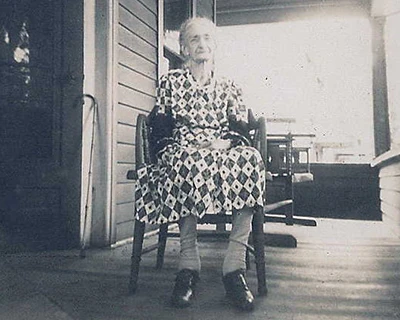
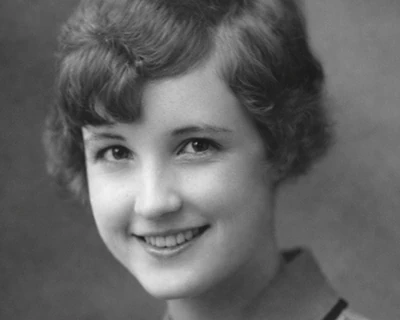
Abigail Florence Gunn Baker
Journalist, historian, civic scholar, and keeper of White House memory — the woman who helped transform presidential possessions into national heritage.
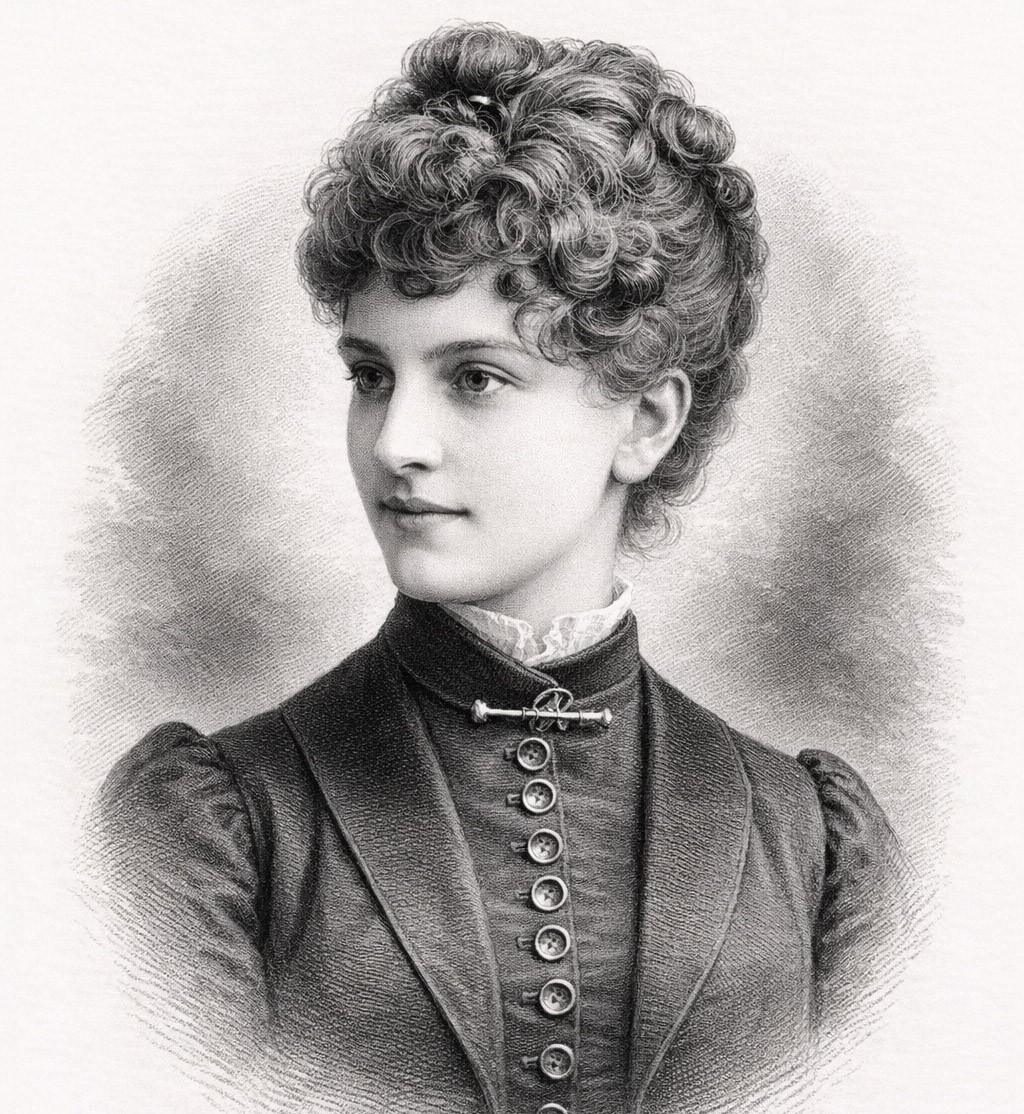
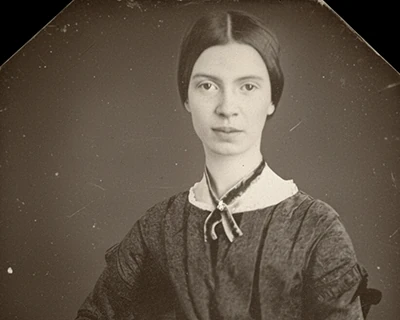
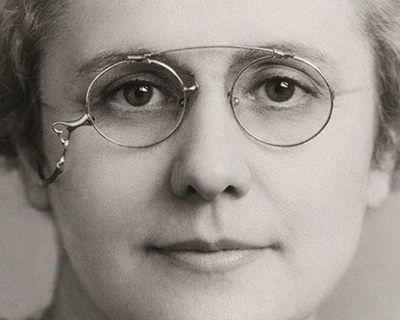
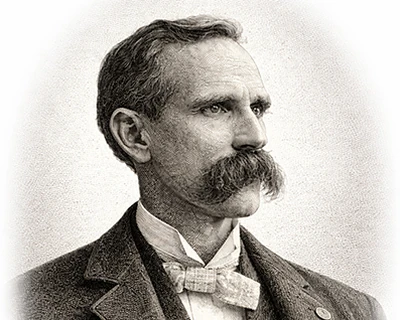
(1860–1923). Engraved portrait, c. 1880s.
Her career reached well beyond presidential china. She wrote extensively for newspapers and magazines, coauthored a substantial study of New York municipal government, published historical research through the Columbia Historical Society, served in women’s educational and missionary organizations, lectured across the country, and undertook wartime service during the First World War.
The White House Historical Association today describes her papers as an important record of both early twentieth-century journalism and changing American attitudes toward the preservation and interpretation of the White House and its collections.
Early Life
Abigail Gunn was born in Pella, Iowa, in 1860, the daughter of the Rev. Elihu Gunn and Amy Barker Barrett Gunn. Her Daughters of the American Revolution lineage record traces her descent through the Gunn family to Lt. Nathaniel Gunn of Sunderland, Massachusetts, who served during the American Revolution.
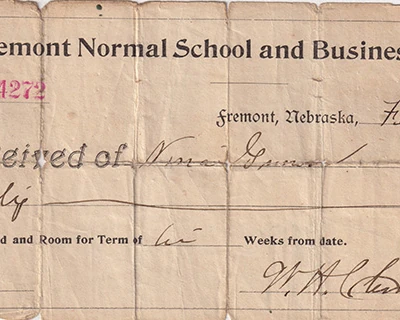
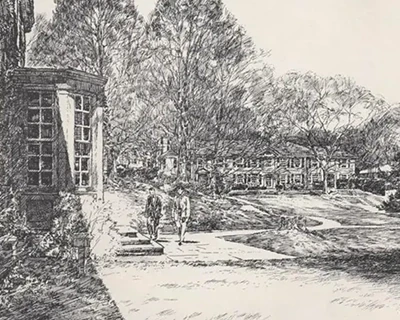
Her father was a Baptist minister and pioneer home missionary in Iowa. Her childhood followed the westward movements of the family, and she spent part of her early life in Lawrence and Atchison, Kansas. Her 1923 obituary reported that she attended Monticello Seminary in Godfrey, Illinois, and Kansas State University at Lawrence — the institution now known as the University of Kansas.
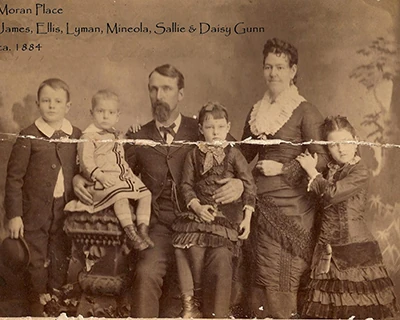
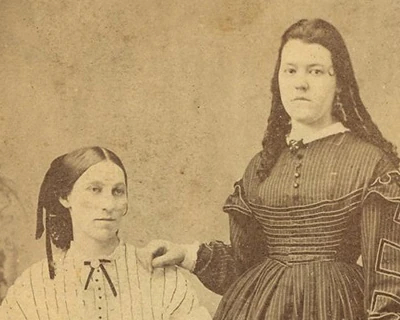
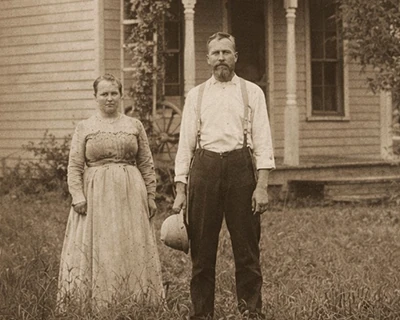
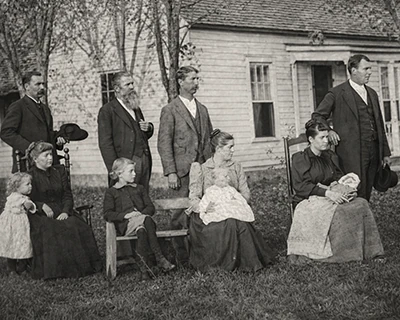
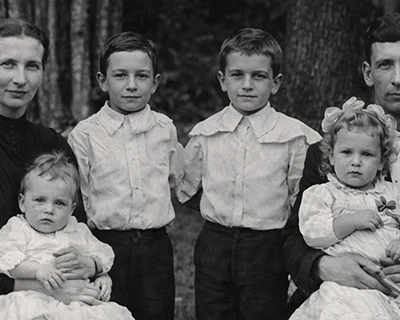
On December 27, 1881, Abby married William Henry Anderson Baker of Fort Scott, Kansas. A Gunn family photograph taken in Fort Scott in 1886 shows Abby and William among members of her extended family.
In 1896, the Bakers moved to Washington, D.C., where William entered government service. This move marks the beginning of the public career for which she became known.
A Washington Journalist
By the turn of the twentieth century Abby Gunn Baker had established herself as a Washington writer with interests in history, public institutions, and material culture. Her 1923 obituary described her as a frequent contributor to leading magazines and newspapers and noted that she had written numerous special articles for Washington’s Evening Star.
Her method was unusually rigorous for popular journalism. Rather than relying solely upon anecdote, Baker consulted government records, examined surviving objects, sought family testimony, compared historical evidence, and recorded provenance. These habits became central to her White House work.
The Presidential China Project
In 1901, Colonel Theodore A. Bingham, commissioner of public buildings and grounds, asked her to investigate the surviving presidential china at the White House. With the permission of First Lady Ida Saxton McKinley, Baker spent approximately four months studying surviving china and searching government records. She contacted former first ladies and presidential descendants in an effort to identify objects associated with earlier administrations and reconstruct their histories.
The project was interrupted by President McKinley’s assassination in September 1901, but Baker continued the research. Her article “The China of the Presidents,” published in Munsey’s Magazine in 1903, was among the earliest systematic published treatments of the White House presidential china collection.
First Lady Edith Kermit Roosevelt subsequently became deeply interested in preserving examples of china from earlier administrations. Baker helped identify pieces still scattered through White House pantries and sought examples from presidential descendants. Rather than indiscriminately purchasing historic china, the Roosevelt administration generally sought pieces through gifts or loans. Baker publicized the effort, contacted presidential families, and encouraged the return of objects with documented historical associations.
Working with Presidential Families
Baker’s research brought her into direct contact with descendants of former presidents. When she contacted Robert Todd Lincoln, he drew a plan of the White House showing the location of President Abraham Lincoln’s offices. Webb C. Hayes, son of President Rutherford B. Hayes, corresponded with her about the circumstances surrounding his father’s inauguration in 1877.
These exchanges reveal the breadth of Baker’s historical project. She was collecting not merely objects but memory. Her research files accumulated correspondence, photographs, clippings, programs, invitations, descriptions of interiors, social customs, and information about White House residents and staff.
Theodore Roosevelt and White House Preservation
A surviving letter from President Theodore Roosevelt dated December 5, 1908, demonstrates how far Baker’s role had expanded.
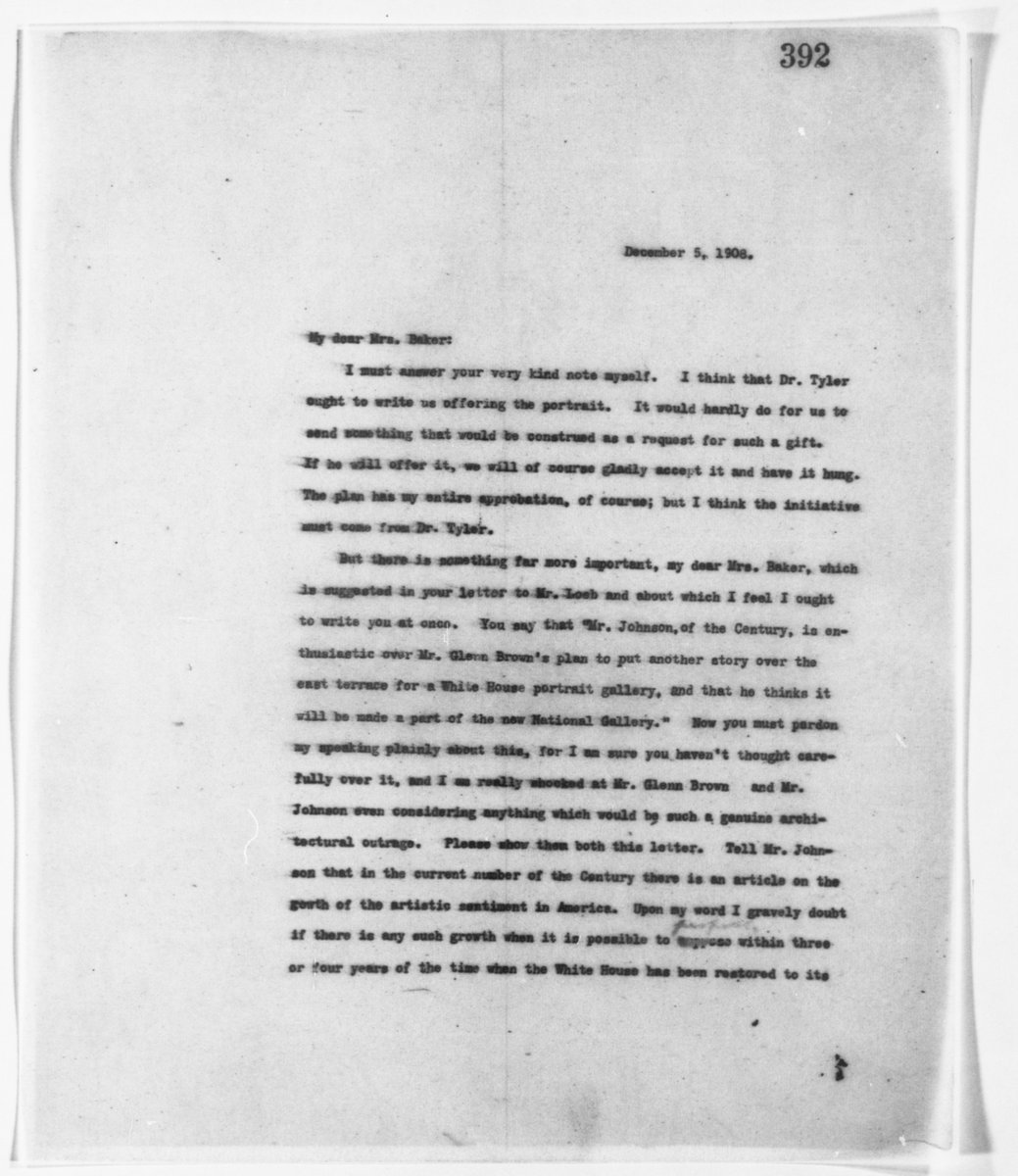
December 5, 1908. Page 1.
Read the full letter →
Roosevelt wrote directly to “Mrs. Abby G. Baker” at 219 Third Street, N.W., Washington, regarding a proposed presidential portrait and an architectural proposal involving the White House terraces. The letter makes clear that Abby was communicating with Roosevelt’s secretary, William Loeb, and with people involved in discussions of White House art and architecture.
Roosevelt instructed her to convey his emphatic objections to a proposal to construct an additional story over one of the White House terraces for a portrait gallery — calling it a “genuine architectural outrage” and comparing it to cutting down the Calaveras grove of big trees to erect a country house. He asked her to show the letter directly to the parties involved.
The exchange places Abby squarely within contemporary discussions about the preservation of the historic character of the White House. By 1908 she was doing something much broader than cataloging china. She had become an intermediary among the White House, journalists, architects, collectors, and preservation advocates.
That same year she published “The White House Collection of Presidential Ware” in The Century Magazine, further demonstrating the evolution of her research into a sustained study of White House material history.
Author and Civic Scholar
In 1906, she and Abby H. Ware coauthored Municipal Government of the City of New York, published by Ginn & Company — a 350-page study of city government used in New York schools. A revised edition appeared in 1916.
Her standing as a historian was further confirmed through the Columbia Historical Society of Washington. In 1913 the Society published her paper “The Erection of the White House” in its Records (pages 120–149). Later that year she presented “Restoration of the White House after its Burning by the British.” Her work remains cited in modern scholarship on White House history and architecture.
Women’s Religious and Educational Leadership
Baker’s public career also grew from the religious world of her upbringing. She joined Calvary Baptist Church after moving to Washington, became president of a Women’s Baptist Missionary Society, and eventually served on the national board of women’s missionary organizations. She helped establish the Burrall Class, an organization of approximately one thousand young women, many of them government clerks in Washington.
One speaking tour associated with the interchurch movement reportedly carried her twice across the United States. In 1911, she chaired the Washington celebration of the Woman’s National Foreign Missionary Jubilee, part of a nationwide movement celebrating fifty years of organized foreign missionary activity by American Protestant women.
Civic and Professional Organizations
Baker participated in several organizations central to educated women and historical scholarship in Washington, including the American Association of University Women, the College Women’s Club, the Daughters of the American Revolution, and the Columbia Historical Society.
Service During the First World War
Her obituary reported that she was one of only two Washington women entitled to wear YMCA insignia in recognition of service in military camps and hospitals during the First World War.
The White House China Room
In 1917, a Ground Floor room was designated for the presidential collection and became known as the China Room. Baker helped select and arrange the china, glassware, and silver displayed there. A surviving 1918 White House photograph is cataloged by the White House Historical Association as “China Room as Organized by Abby Gunn Baker.”
Abby’s distinctive contribution was continuity. Across presidential administrations, she supplied research, identification, correspondence, collection development, and historical interpretation where others came and went.
Heirs and Heirlooms of the White House
During the later years of her life, Baker worked on Heirs and Heirlooms of the White House — an intended three-volume study containing her personal recollections of assembling the presidential collection, interviews with former first ladies and presidential families, and material gathered during more than two decades of research. The work remained unfinished when she died. Her papers were eventually given to the White House in 1969 and 1999 by Amy V. Barton, Baker’s grandniece.
Death
After an illness of nearly six weeks caused by peritonitis, Abby Gunn Baker died at Garfield Hospital in Washington on January 25, 1923. Her funeral was held January 27 at Calvary Baptist Church. The Evening Star obituary described her as a widely known writer, a leader in missionary and educational work, and a recognized authority on White House history. She was sixty-two or sixty-three years old.
Legacy
Abby Gunn Baker lived at the convergence of several important changes in American life — women entering journalism and scholarship, growing consciousness of historic preservation, historical societies professionalizing research, and museums emphasizing provenance and documentation.
She was not formally a White House curator; that position would not exist until decades after her death. Yet many of the activities she performed — cataloging objects, investigating provenance, documenting interiors, corresponding with descendants, arranging collections, recording oral testimony, and preserving archival material — anticipated the practices of later professional curators and public historians.
She helped change the way the White House itself was understood. The Executive Mansion was no longer merely the temporary residence of whichever president happened to occupy it. Its furnishings, rooms, objects, photographs, documents, and family memories were increasingly recognized as part of a continuous national history.
Within the larger Gunn family story, her life represents another form of public service. Earlier generations served as ministers, physicians, teachers, soldiers, and civic officers. Abby served through scholarship and memory. She recovered evidence, recorded recollections, preserved objects — and by doing so, helped ensure that a portion of the American past survived.
Sources & Further Reading
- White House Historical Association, “The White House Collection Research Sources in the Office of the Curator,” describing the Abby Gunn Baker Papers
- National Society of the Daughters of the American Revolution, Lineage Book, member no. 60793, “Mrs. Abigail Gunn Baker”
- January 1923 obituary, Washington Evening Star
- Isabella Hagner, memoir of White House service, 1901–1905
- Abby Gunn Baker, “The White House Collection of Presidential Ware,” Century Magazine 76 (October 1908): 830
- Abby Gunn Baker, “The Erection of the White House,” Records of the Columbia Historical Society, Washington, D.C. 16 (1913): 120–149
- “Communications Made to the Columbia Historical Society,” Records of the Columbia Historical Society, Washington, D.C. 17 (1914): 242–246
- Library of Congress, Prints and Photographs Division, “White House, West Colonial Garden,” copyright credited to Abby Gunn Baker, Washington
- White House Historical Association, “Hail to the Chief Curator”
Sources & Notes
- White House Historical Association, 'The White House Collection Research Sources in the Office of the Curator,' describing the Abby Gunn Baker Papers
- National Society of the Daughters of the American Revolution, Lineage Book, member no. 60793, 'Mrs. Abigail Gunn Baker'
- January 1923 obituary, Washington Evening Star
- Isabella Hagner, memoir of White House service, 1901–1905
- Abby Gunn Baker, 'The White House Collection of Presidential Ware,' Century Magazine 76 (October 1908): 830
- Abby Gunn Baker, 'The Erection of the White House,' Records of the Columbia Historical Society, Washington, D.C. 16 (1913): 120–149
- 'Communications Made to the Columbia Historical Society,' Records of the Columbia Historical Society, Washington, D.C. 17 (1914): 242–246
- Library of Congress, Prints and Photographs Division, 'White House, West Colonial Garden,' copyright credited to Abby Gunn Baker, Washington
- White House Historical Association, 'Hail to the Chief Curator'