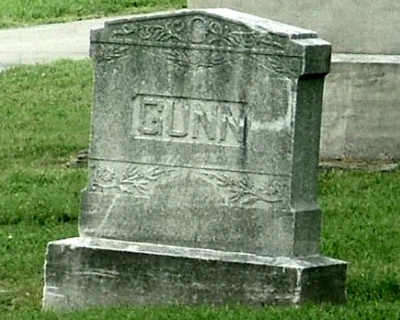

George Almon Gunn
Union Soldier Killed at Deep Bottom
23 November 1823 – 16 August 1864
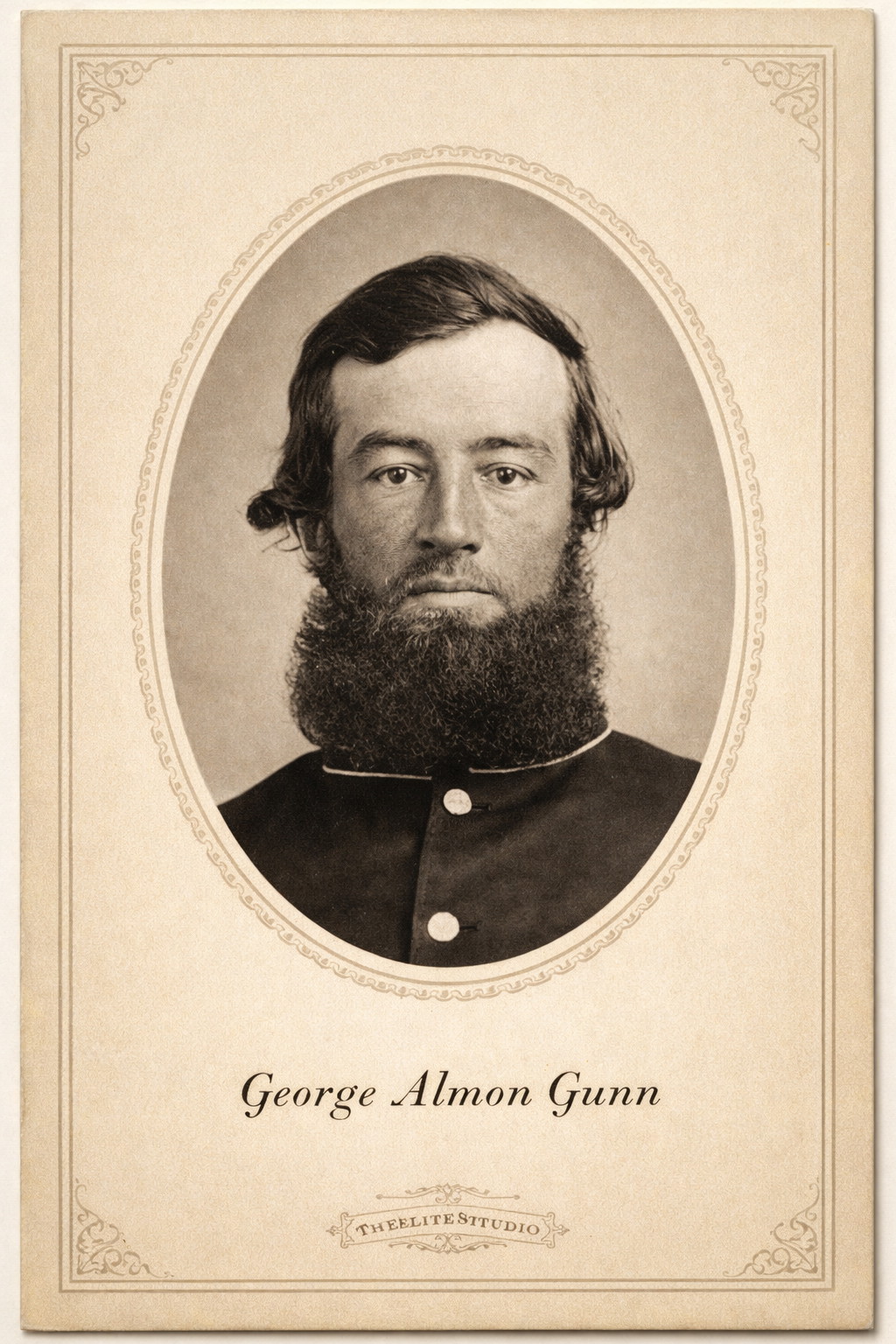
George Almon Gunn was born November 23, 1823, at Mentor, Ohio, into a family whose history stretched back to the earliest generations of colonial New England. His grandfather had served during the American Revolution. His mother’s family would become closely connected with the beginnings of the Mormon movement. George himself became part of another defining chapter in American history when, at the age of thirty-eight, he enlisted in the Union Army during the Civil War.
For nearly two years he served with the 67th Ohio Volunteer Infantry, following the regiment from the Carolina coast to the battlefields surrounding Richmond and Petersburg.
On August 16, 1864, Private George Gunn was killed in action at Deep Bottom, Virginia.
He left behind a widow, three children, and a son who appears to have been born after his death.
From New England to Ohio
George was the son of Henry A. Gunn and Tirzah Morley. Family records identify Henry as a son of Sgt. Moses Gunn and grandson of Lt. Nathaniel Gunn Jr., Deacon, one of the central figures in the Gunn family line followed in The Gunns in America.1
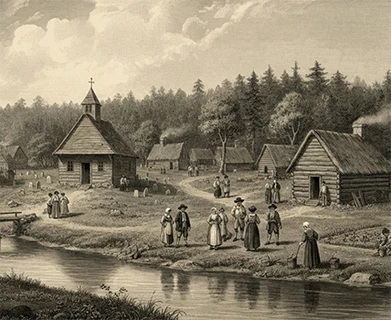
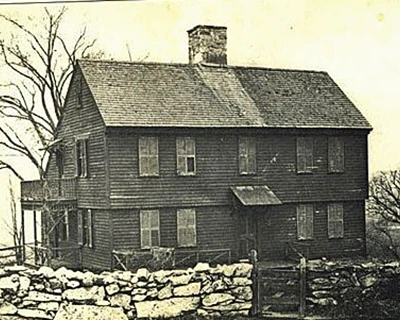
Through that line, George descended from Jasper Gunn, who came to Massachusetts aboard the Defence in 1635 and became one of the founders of Milford, Connecticut.
The descent was:
Jasper Gunn → Nathaniel Gunn → Deacon Samuel Gunn → Deacon Nathaniel Gunn → Lt. Nathaniel Gunn Jr. → Sgt. Moses Gunn → Henry A. Gunn → George Almon Gunn
George’s grandfather, Sgt. Moses Gunn, belonged to the generation that experienced the American Revolution. George would belong to the generation that confronted the Civil War.
The geography of George’s life also reflected the steady westward movement of the Gunn family. Earlier generations had moved north from Connecticut into the Connecticut River Valley of Massachusetts. Henry Gunn’s generation continued westward into Ohio, where George was born at Mentor in 1823.1
The Morley Connection
George’s mother, Tirzah Morley, brought another significant connection into the family.
Tirzah was born January 1, 1790, at Montague, Massachusetts, a daughter of Thomas Morley and Editha Marsh. She married Henry Gunn at Montague on July 28, 1806, and subsequently moved west with her family. She died in Ohio in 1842.1
Tirzah was a sister of Isaac Alonzo Morley, who became an early convert and leader in the Church of Jesus Christ of Latter-day Saints.
The Morley and Gunn families were connected in another way as well. Isaac Morley married Lucy Gunn, daughter of Capt. Asahel Gunn. Thus Henry Gunn married Tirzah Morley while Tirzah’s brother Isaac married Lucy Gunn.2
These overlapping relationships placed George within a family network that intersected with several currents of nineteenth-century American history: migration from New England into the Old Northwest, the emergence of new religious movements, and ultimately the Civil War.
Margaret McKiffen
George’s first wife was Margaret McKiffen.
A surviving Gunn family history records that George married Margaret and that they had one child:
Margaret Ann Gunn, born April 1, 1858, in Fulton County, Ohio.3
The birth was followed almost immediately by tragedy.
Margaret McKiffen Gunn died on April 10, 1858, only nine days after the birth of her daughter. The family account gives her age at death as twenty-four years, eight months and twenty-two days and states that she was buried in an old cemetery at Wauseon, Ohio.3
George was left a widower with an infant daughter.
Margaret Ann survived. On January 17, 1878, she married Albert Stites. According to the same family account, they became the parents of four sons and two daughters.3
Rhoda Tedrow
After Margaret’s death, George married Rhoda Tedrow, of Ai, Ohio.
The family history provides unusually specific information about their marriage. George and Rhoda were married on December 11, 1859, at Fairfield, Michigan, and the marriage was recorded in Lenawee County. George was thirty-six years old; Rhoda was eighteen.3
Their marriage produced two sons:
- William Henry Gunn, born 1861, died 1947
- George Washington Gunn, born 1865, died 19003
George therefore entered the Civil War not as a young man seeking adventure but as a mature husband and father responsible for a growing family.
The 67th Ohio Infantry
On September 11, 1862, George enlisted in the Union Army.
The Official Roster of the Soldiers of the State of Ohio records him as thirty-eight years old when he enlisted and mustered as a private in Company I, 67th Ohio Volunteer Infantry.4
The 67th Ohio had already been in service before George joined it. During the period in which George served, the regiment moved through a remarkable succession of campaigns.
At the beginning of 1863, it moved from Virginia through North Carolina and then to South Carolina. It occupied Folly Island and participated in operations against the Confederate defenses of Charleston Harbor. In July, the regiment took part in operations on Morris Island and the assaults against Fort Wagner, followed by the prolonged siege of Wagner and operations against Fort Sumter and Charleston.5
George had traveled far from the Ohio home where Rhoda and his children waited.
Back to Virginia
In the spring of 1864, the regiment returned to Virginia and joined the Army of the James.
The 67th participated in Maj. Gen. Benjamin Butler’s operations against Richmond and Petersburg during May, including the Bermuda Hundred campaign and fighting around Fort Darling and Drewry’s Bluff. By June, it had entered the extended operations against Petersburg and Richmond.5
The fighting of 1864 was relentless. The regiment’s history records operations around Petersburg in June followed by the movement north of the James River to Deep Bottom in August.5
It was there that George’s war ended.
Deep Bottom — August 16, 1864
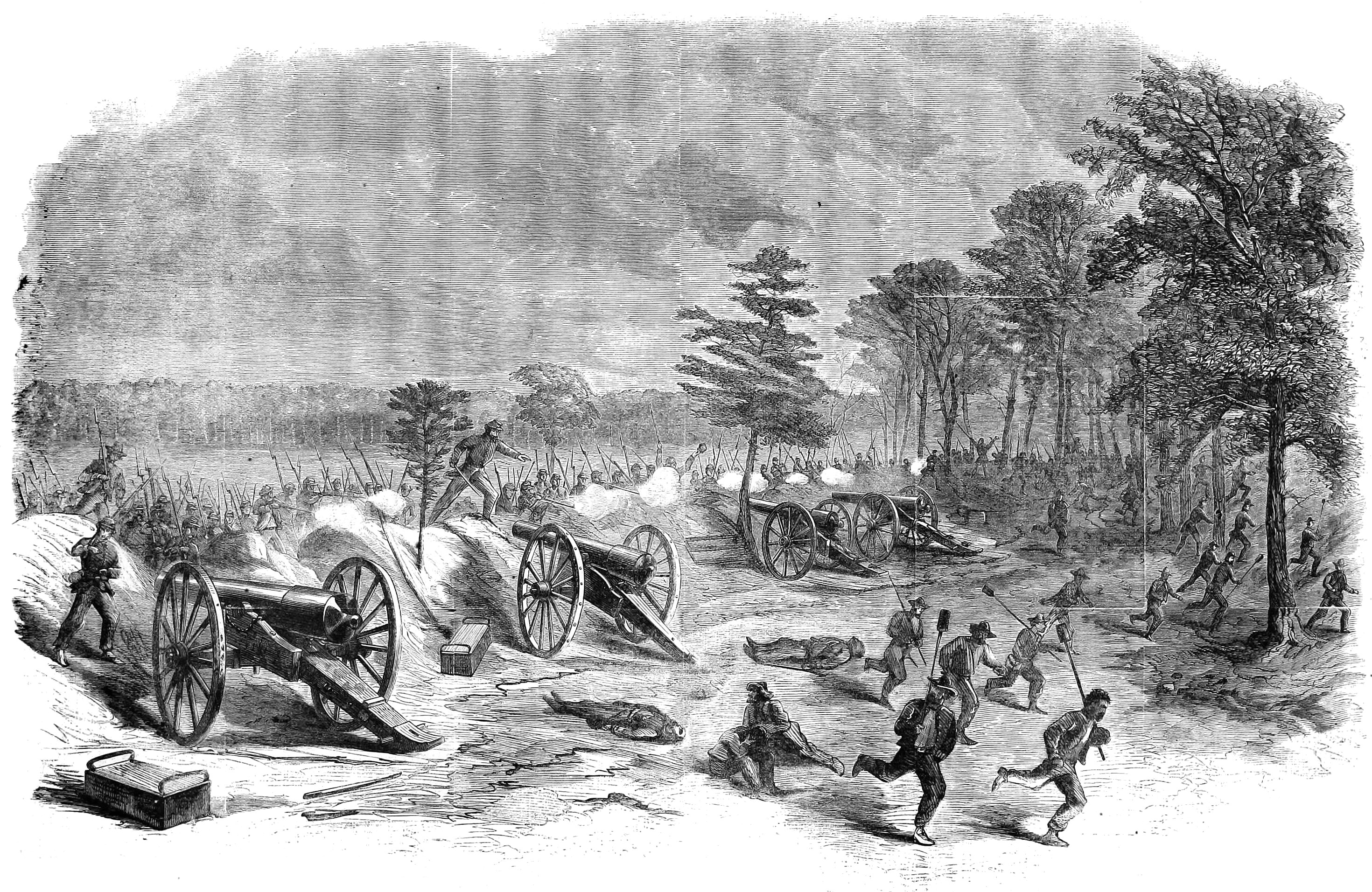
In August, Union forces crossed the James River at Deep Bottom in an effort to threaten Richmond and compel Robert E. Lee to shift Confederate troops away from Petersburg.
The 67th Ohio’s service history places the regiment in the demonstration north of the James at Deep Bottom from August 13 through August 20, and at Strawberry Plains from August 14 through August 18.5
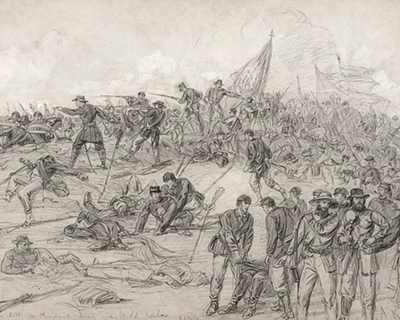
The fighting on August 16 was particularly severe. A history of the regiment describes four companies charging Confederate rifle pits at Deep Bottom and suffering devastating casualties in the first volley before taking the position.6
On that same day, August 16, 1864, Private George Gunn of Company I was killed.
The Ohio military roster records:
George Gunn — Private, Company I, 67th Ohio Infantry. Enlisted September 11, 1862. Killed August 16, 1864, at Deep Bottom Run, Virginia.4
The surviving Gunn family history remembered the location more generally as Petersburg, Virginia.3 The two accounts are not fundamentally contradictory. Deep Bottom was part of the larger military operations against Richmond and Petersburg, but the official Ohio record provides the more precise location of George’s death.
He had served for nearly two years.
Henry Gunn Was There
The family history preserves another detail that makes George’s death unusually personal.
George had gone to war with his nephew Henry Gunn. The account identifies Henry as a son of Charles Oscar Gunn and states that Henry was with George when he was killed.3
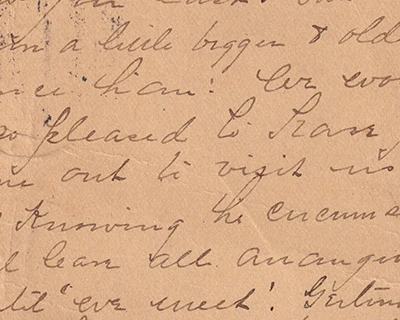
Afterward, Henry wrote a letter to Rhoda.
The family historian who compiled the surviving account knew of a copy of that letter and specifically mentioned it when describing George’s death.3
If that letter can still be located, it could become one of the most important surviving documents connected with George Almon Gunn. Unlike a military roster or regimental history, Henry’s letter could potentially tell us what happened to George through the words of a family member who was present.
For now, its existence alone brings us closer to the battlefield than the official record can.
George was not simply one of thousands of names entered on a casualty roll. Someone who knew him saw what happened and wrote home to his wife.
The Revolutionary Soldier and His Grandson
George’s death takes on another dimension when placed against his family history.
His grandfather, Sgt. Moses Gunn, had served during the American Revolution.
Moses belonged to the generation that fought during the creation of the United States. His grandson George entered the army during the crisis that threatened the nation’s survival and centered increasingly on the destruction of slavery.
Only two generations separated their military service.
George did not live to see the outcome of his war.
He died in August 1864. Petersburg and Richmond remained in Confederate hands throughout the following winter. They fell in April 1865, and Robert E. Lee surrendered the Army of Northern Virginia at Appomattox Court House on April 9.
George had been dead nearly eight months.
The Son He Never Knew
George’s death did not end at Deep Bottom.
Rhoda remained at home with the children. Their youngest son, George Washington Gunn, was born in 1865.3
If the presently recorded birth year is correct, Rhoda was pregnant when her husband was killed.
George Almon Gunn therefore never saw the son who carried his name.
That small fact brings the scale of the Civil War back to the family. Battles are remembered through generals, armies, maps and casualty totals. Their consequences were experienced in homes — in the lives of widows, children and unborn sons.
Rhoda lived until 1903. Later records indicate that she remarried and eventually traveled still farther west, continuing the migration that had already carried the Gunn family from New England into Ohio.7
Burial
The military information associated with George’s Ohio record gives his burial location as Fort Harrison, Virginia.4
This presents an unresolved question.
George was killed at Deep Bottom on August 16. Fort Harrison, part of the Confederate defenses southeast of Richmond, was not captured by Union forces until September 29. It is therefore possible that the burial notation reflects a later reinterment or military burial rather than the place where George was initially buried.
Until a burial or reinterment record can be located, the most responsible description is simply that the Ohio record gives Fort Harrison, Virginia, as his burial place.
The Family Continued
George’s descendants carried his family into the twentieth century.
His daughter Margaret Ann survived the loss of both parents’ original household and raised a family of her own. His sons William Henry and George Washington carried the Gunn name into another generation.
And military service appeared once again among George’s descendants.
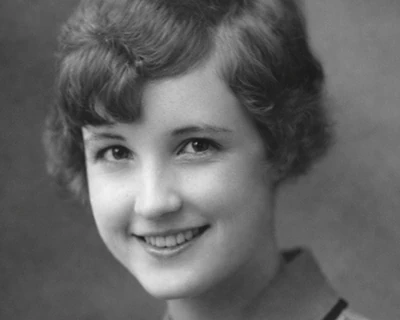
His great-granddaughter Bernice A. Gunn served in the WAVES — Women Accepted for Volunteer Emergency Service — during World War II.
Across this branch of the family, three generations connect three very different periods of American military history:
- Sgt. Moses Gunn — American Revolution
- Private George Almon Gunn — Civil War
- Bernice A. Gunn — World War II
The circumstances of their service were different, separated by generations and profound changes in American society. But together they form a remarkable thread through the family’s history.
Legacy
George Almon Gunn was not a famous man.
He left behind no political career, published memoir or institution bearing his name. What survives instead is something more representative of the American experience: the fragments of an ordinary life caught in extraordinary events.
His ancestry reached back through the Connecticut River Valley to Jasper Gunn and seventeenth-century New England. His grandfather served during the Revolution. His parents joined the movement west into Ohio. Through his mother, his family intersected with the beginnings of the Mormon movement.
George married Margaret McKiffen and lost her only days after the birth of their daughter. He rebuilt his family with Rhoda Tedrow and became a father again.
Then came the Civil War.
At thirty-eight, George left his wife and children and enlisted as a private soldier. His regiment carried him from Ohio to the Carolina coast, the siege lines before Charleston, the battlefields of Virginia and finally Deep Bottom.
On August 16, 1864, his nephew Henry was there when George was killed.
A letter went home to Rhoda.
Another son was still to be born.
George’s story belongs in The Gunns in America precisely because it reaches beyond genealogy. The names and dates establish the family line, but the events surrounding them reveal something larger: how migration, religion, war, loss and survival moved through generations of one American family.
His grandfather had lived through the Revolution.
George would not live through the Civil War.
The family did.
Family
| Born | November 23, 1823, Mentor, Ohio |
| Died | August 16, 1864, Deep Bottom Run, Virginia |
| Parents | Henry A. Gunn and Tirzah Morley Gunn |
| Paternal grandfather | Sgt. Moses Gunn, Revolutionary War veteran |
| Maternal uncle | Isaac Alonzo Morley |
| First wife | Margaret McKiffen Gunn (c. 1833–1858) |
| Child | Margaret Ann Gunn (1858–1937) |
| Second wife | Rhoda Tedrow Gunn (1841–1903) |
| Children | William Henry Gunn (1861–1947); George Washington Gunn (1865–1900) |
| Military service | Private, Company I, 67th Ohio Volunteer Infantry, Union Army |
| Enlisted | September 11, 1862 |
| Killed in action | August 16, 1864 |
| Recorded burial | Fort Harrison, Virginia |
Notes
Research Note: The most important outstanding source is now Henry Gunn’s letter to Rhoda. Locating it should be a priority — the family typescript confirms a copy existed when that account was compiled. If recovered, it could establish the circumstances of George’s death, Henry’s relationship to him, what happened to George’s body, and what Rhoda was told immediately after the battle. A second priority is George’s Compiled Military Service Record and any widow’s or minor’s pension file associated with Rhoda and the children. Together with Henry’s letter, those records could turn an already strong biography into one of the best-documented individual Civil War stories in the Gunn collection.
Footnotes
-
Gunn family genealogical records and compiled family histories identify George Almon Gunn as the son of Henry A. Gunn and Tirzah Morley, born November 23, 1823, at Mentor, Ohio. The same family reconstruction traces Henry through Sgt. Moses Gunn to Lt. Nathaniel Gunn Jr., Deacon, and the earlier Gunn family of Massachusetts and Connecticut. ↩ ↩2 ↩3
-
Genealogical records of the Morley family identify Tirzah Morley as a sister of Isaac Alonzo Morley. Isaac married Lucy Gunn, daughter of Capt. Asahel Gunn. Lucy should not be confused with either of George Almon Gunn’s wives. ↩
-
Gunn family history, typescript, section concerning George Gunn, copy in the author’s research collection. The account states that George was born November 23, 1823, at Mentor; married Margaret McKiffen; had daughter Margaret Ann, born April 1, 1858; and that Margaret McKiffen Gunn died April 10, 1858. It further records George’s marriage to Rhoda Tedrow at Fairfield, Michigan, December 11, 1859; identifies their sons William and George Washington; and states that George’s nephew Henry Gunn was with him when he was killed and subsequently wrote Rhoda a letter concerning his death. ↩ ↩2 ↩3 ↩4 ↩5 ↩6 ↩7 ↩8 ↩9
-
Official Roster of the Soldiers of the State of Ohio in the War of the Rebellion and Roll of Honor of Ohio Soldiers, entry for George Gunn, Company I, 67th Ohio Infantry; enlistment age thirty-eight; enlisted and mustered September 11, 1862; killed August 16, 1864, Deep Bottom Run, Virginia; burial place recorded as Fort Harrison, Virginia. Record information also reproduced with the Find a Grave memorial for George Gunn. ↩ ↩2 ↩3
-
Frederick H. Dyer, A Compendium of the War of the Rebellion, regimental history of the 67th Ohio Infantry. The regiment served on Morris Island and in operations against Fort Wagner, Fort Sumter and Charleston during 1863; returned to Virginia in 1864; participated in the Bermuda Hundred operations; and fought at Deep Bottom and Strawberry Plains in August 1864. The regiment’s detailed service chronology is reproduced by Ohio Civil War Central. ↩ ↩2 ↩3 ↩4
-
The regimental service chronology places the 67th Ohio at Deep Bottom August 13–20 and Strawberry Plains August 14–18, encompassing the date of George’s death. A contemporary regimental-history account reports that four companies suffered severe losses while charging Confederate rifle pits on August 16. ↩
-
Cemetery and genealogical records for Rhoda Tedrow Gunn and her later family. Further primary documentation of her subsequent marriages and westward migration should be sought before those details are treated as definitive. ↩