



The Rights of a People
This is a reading edition of an abridged transcription published by Pressey in 1910. Historical spelling, wording, punctuation, square brackets, and the ellipsis are retained as supplied. The ellipsis marks a gap in the published text, not an editorial cut. No manuscript of the letter has been located.
Presented April 20, 1773
Montague’s reply to the Boston Committee of Correspondence
Background
In the spring of 1773 the Revolution was two years off, and no one in Montague was asking for independence. The question in Massachusetts was narrower and, in its way, more dangerous: by what right could a Parliament in which the colonists had no representatives govern them?
On November 20, 1772, the Boston Committee of Correspondence circulated a statement of colonial rights and the infringements upon them. On April 6, 1773, Montague formed a committee to answer it. The seven men named were Moses Gunn, Moses Harvey, Elisha Allis, Stephen Tuttle, Peter Bishop, Judah Wright, and Nathaniel Gunn Jr., Moses’s elder brother.
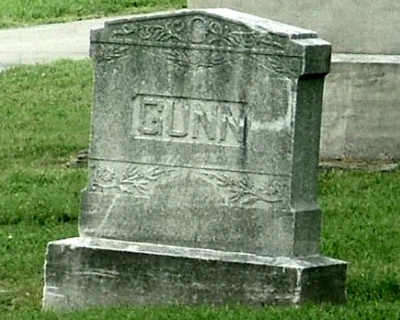
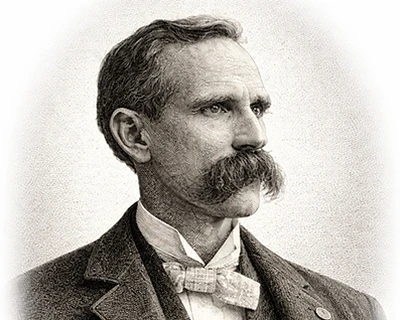
Pressey credits Dr. Moses Gunn with composing the answer. Gunn was a Yale graduate, a physician, and a longtime Montague selectman, the son of Deacon Nathaniel Gunn and the grandson of Deacon Samuel Gunn. He read the letter to the town meeting on April 20. According to Pressey, the assembly asked to hear it read a second time.
The Letter
“To the Committee of Correspondence of the Town of Boston, Gentlemen: — Having carefully perused your pamphlet of the 20 of November last, containing a statement of the rights of the colonists, with the infringement on those rights (which came to us about three months after publication), we are of the opinion that you have, in general, justly stated our rights as men, as Christians, and as subjects. As Christians, we have a right to worship God according to the dictates of conscience owing all religious obedience to Him who hath declared that his kingdom is not of this world. As men, and as subjects, we have a right to life, liberty and property. These we have as our natural birthright, being descended from those renowned ancestors, who crossed the Atlantic at their own expense; purchased the soil of the natives, and who with their successors have ever defended it with treasure and blood; confirmed in the right ample manner by the royal charters whereby the people of the Province have the sole and absolute property of the soil, in fee simple, with all the appurtenances — waters, rivers, mines, etc., except only of the part of gold and silver ore reserved to the crown. As to infringement on our rights, we do not pretend fully to understand the power of vice nominalty courts, but that there is so great a difference made between subjects entitled to the same liberties and immunities within the colonies as in the Realm [of England herself] as there appears to be, affords matter of conviction that [a representative government with local legislative bodies interspersed] is their only security against impartiality and injustice; and that a Parliament at three thousand miles distance can never have an equitable right to bind colonies in all cases whatever. That the commissioners of the customs, or any set of men known or unknown, in our charter, should have general warrants to search houses, shops, chests, etc., is illegal, and hath been publicly declared to be so within the Realm [of England herself] in the great case between John Wilkes, Esq., and the Earl of Halifax… .
“We thank the town of Boston for their patriotic zeal in the common cause, particularly as their Pamphlets hath paved the way for a full discussion of our natural and charter rights, in the general assembly at their late session, whereby much light hath been cast on the subject. We reflect with gratitude and pleasure on their learned labor, in defence of our just rights, in which they have discovered a thorough knowledge of our constitution, and great firmness in defense of it.
“Gentlemen, we look upon the particular occasion of your letter to be very alarming to every sensible lover of his country. We acknowledge the activity and vigilance of the town of Boston. Trusting that salutary and important ends to the public good have been and still may be answered thereby, we consider the infringments on our rights stated in the Pamphlets as being what in reason and justice ought to give deep concern to every friend of his country, and excite his endeavors, in all suitable lawful methods, to obtain redress. We hope that the knowledge of our natural and constitutional rights may be still further propagated among people of all ranks. That the natural principle of self preservation may be timely and thoroughly awakened and unerringly directed. That a criminal and scandalous inattention of indifference to our rights may be an infamy never justly charged upon us, esteeming a tame submission to slavery more infamous than slavery itself.”
Reading the Letter
Gunn is not asking for separation. He claims rights the colonists already held, and he claims them on three grounds.
As Christians, liberty of conscience: religious obedience is owed to God, and the kingdom is “not of this world.”
As men, life, liberty, and property, held as a natural birthright and not as a favor of the Crown.
As subjects, the protection of the royal charters, which he reads as giving the people of the Province absolute title to the soil. The argument rests on the settlers’ claim to have purchased the land from the native inhabitants. It passes over what English settlement cost those inhabitants and how much of the land changed hands. That was the common assumption among New England settlers, and the letter should be read with it in view.
Representation. The center of the letter is the sentence that a Parliament “at three thousand miles distance can never have an equitable right to bind colonies in all cases whatever.” His objection is not that the burden is heavy. It is that authority without representation is illegitimate, which is why a dispute over taxes became a dispute over constitutional rights.
General warrants. Gunn cites the Wilkes case in England to argue that sweeping searches by customs officers were illegal even there. The concern is the same one later written into the Fourth Amendment. It would be going too far to say he anticipated the amendment, but his argument belongs to the same tradition.
“Slavery.” The closing sentence calls tame submission to slavery more infamous than slavery itself. This is the political metaphor of the period, used by writers who lived among actual slaves and mostly did not apply it to them. The letter says nothing about Gunn’s own views on the enslavement of Africans, and it should not be read as an antislavery argument.
Education. He hopes knowledge of rights will spread “among people of all ranks.” Gunn believed that a people cannot defend rights it does not know it has, and that the case had to be taught.
His course in 1773 is lawful redress. Within two years he was a delegate to the Massachusetts Provincial Congress, and the argument had moved from the town meeting to a government in the making. Pressey, writing in 1910, remembered him as Montague’s Samuel Adams.
Editorial Notes
1. Source and authority. The text is Pressey’s published transcription (1910, pp. 123–25), not the manuscript. Pressey’s own source is not identified here, and the original has not been found.
2. The ellipsis. The ellipsis after the Wilkes and Halifax reference marks a gap in the published text. Its length and content are unknown, and no attempt has been made to fill it.
3. Square brackets. The bracketed passages are kept exactly as supplied. Who added them, and why, is not established, so they should not be attributed to Gunn.
4. “Vice nominalty courts.” Almost certainly vice-admiralty courts, which tried maritime and customs cases. The text is left as printed.
5. “Impartiality and injustice.” Possibly “partiality and injustice.” Check against an earlier source before correcting. The text is left as printed.
6. “Inattention of indifference.” Possibly “inattention or indifference.” An online scan of Pressey that I could reach prints “or” in its page-27 mention of this letter. Confirm against the page image before deciding.
7. Wilkes and Halifax. Wilkes v. Halifax was the best-known English case on general warrants, and colonial writers cited it often.
8. The Boston pamphlet. Gunn answers the Boston Committee’s statement of November 20, 1772, sent to the towns of Massachusetts. The letter says it reached Montague about three months after publication.
9. The April 20 meeting. Pressey reports the letter was read a second time at the assembly’s request. The original town-meeting record should be consulted.
10. Authorship and date. Pressey names Gunn as composer, but the letter speaks for the whole committee. April 20, 1773, is the presentation date. The dates of composition and dispatch are not established.
11. Page numbers and committee list. An online scan I could reach covers only the front of Pressey. There, a short account of this committee appears on page 27 and lists six members, without Peter Bishop. This page cites pp. 123–25 for the letter and names seven members. Reconcile both against the printed pages.
Sources
- Edward Pearson Pressey, History of Montague: A Typical Puritan Town (Montague, MA: New Clairvaux Press, 1910), 122–25. Read it at the Internet Archive.
- Boston Committee of Correspondence, The Votes and Proceedings of the Freeholders and Other Inhabitants of the Town of Boston, in Town Meeting Assembled, According to Law (Boston: Edes and Gill, 1772).
- William Lincoln, ed., The Journals of Each Provincial Congress of Massachusetts in 1774 and 1775, and of the Committee of Safety (Boston: Dutton and Wentworth, 1838).
Editorial status: provisional reading edition of an abridged transcription. The original 1773 correspondence remains to be located.